

Experiences from practice — industry
A workplace that moves with what changes
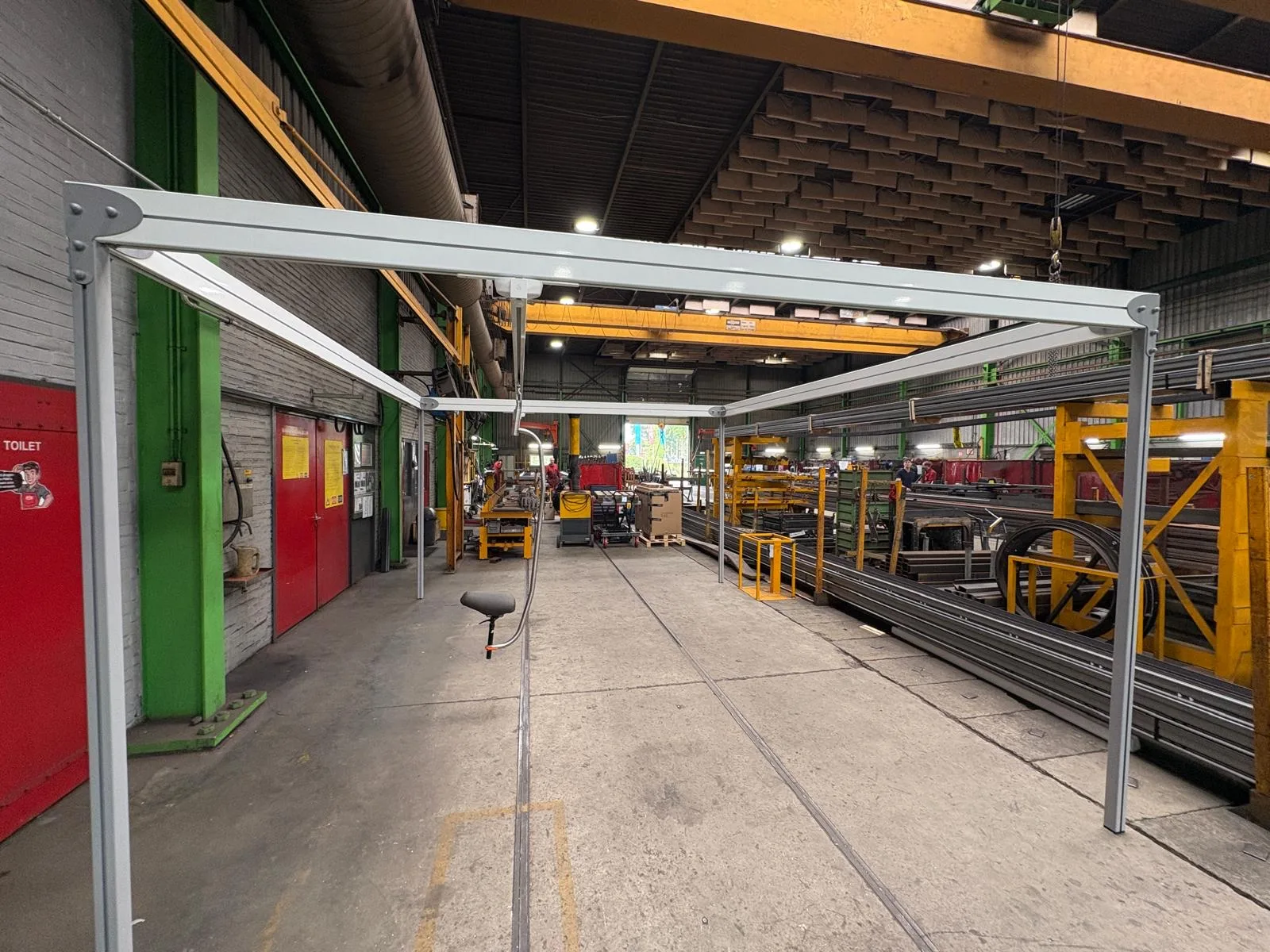
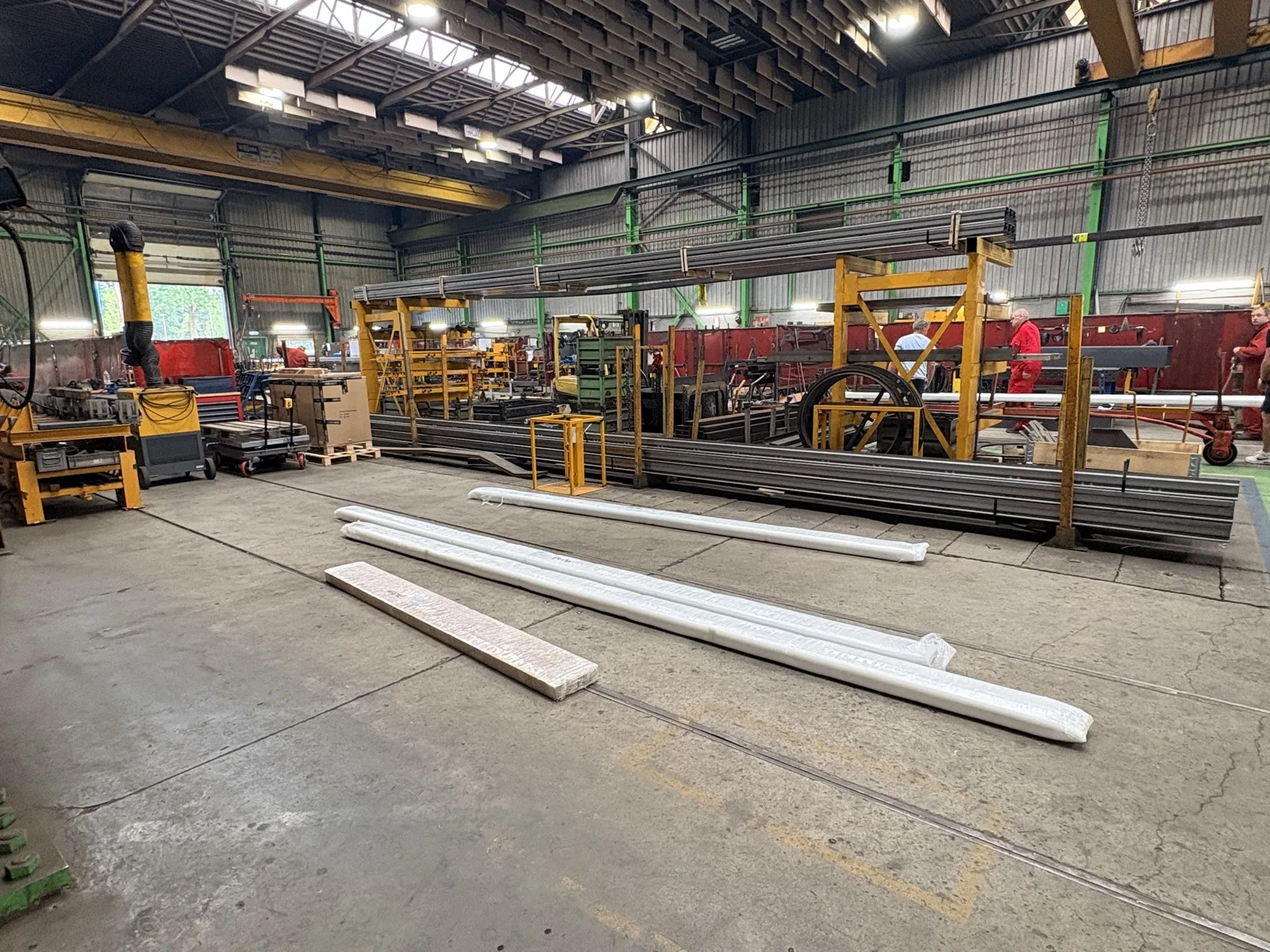
A free-standing gantry on four columns, in a hall where overhead cranes run above the shop floor.
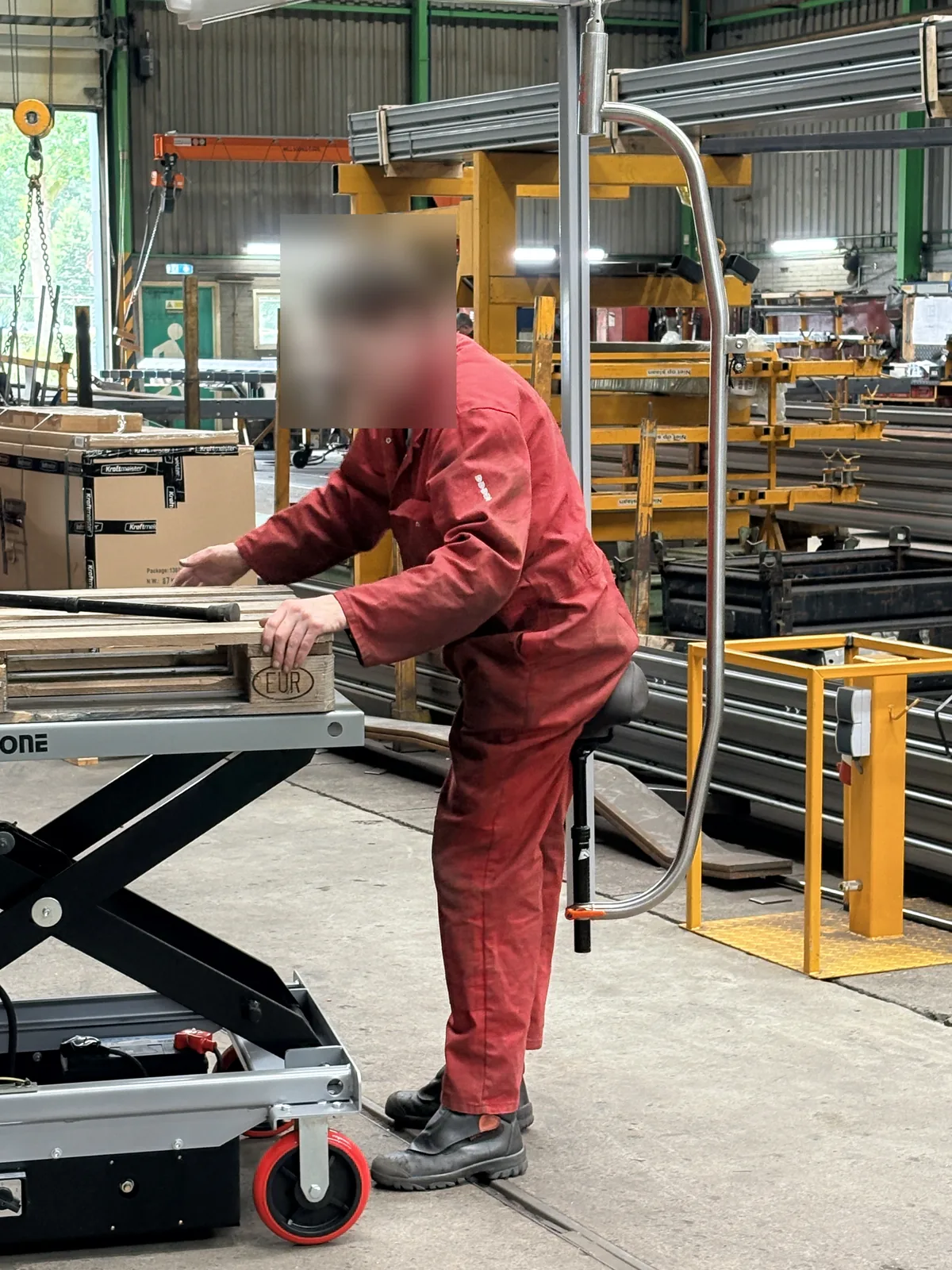
At a company that builds trailers, one employee can put less and less weight on one leg. What was still manageable last year takes more effort this year. Standing for long periods and walking a lot became a problem.
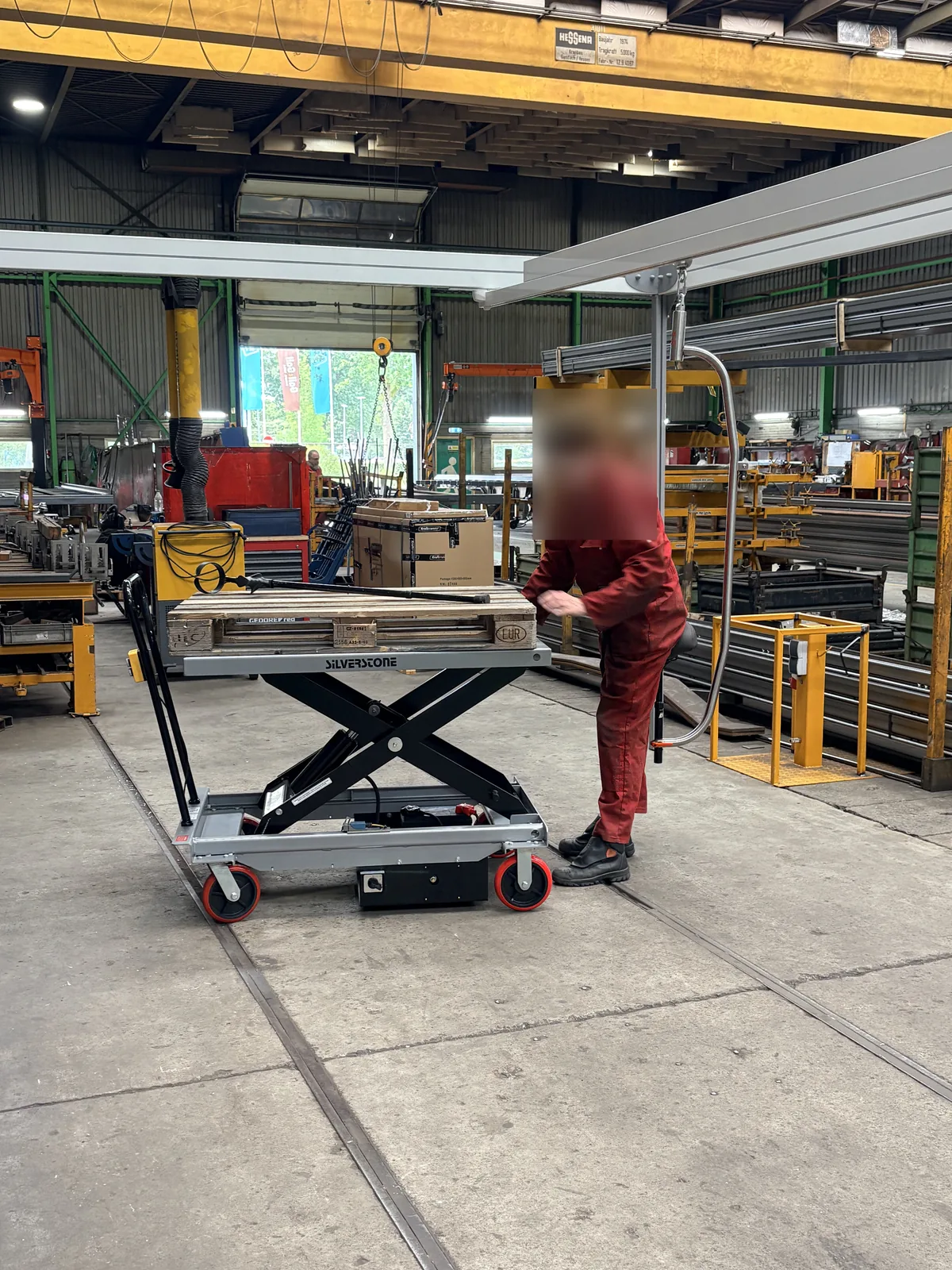
The employer chose to adapt the workplace rather than move the employee to other work. A height-adjustable work bench was installed, so the working height adjusts to the task instead of the other way round. And a Standing Ovation was added, so he no longer has to carry his weight entirely on his legs.
In a factory hall you cannot simply hang such a system from the ceiling. Overhead cranes run above the shop floor and the roof structure is not designed for it. So here it stands on its own legs: four columns carrying a gantry, with a traverse rail beneath. The mobility support hangs from that rail and moves along across the whole workplace. Not a single hole was drilled in the building and nothing about the existing structure was changed.
He simply carries on working with both hands free: stacking pallets, laying out material, setting the table to height. He just no longer stands entirely on his legs while doing it.
The process ran internally, guided by an HR employee. No occupational expert was involved and no subsidy was applied for: the employer paid for the adaptation entirely itself, because it considered keeping an experienced employee at work worth it.
Together those two adaptations achieve something neither would on its own: a workplace set up for what changes, and not only for how things are today.
The solution
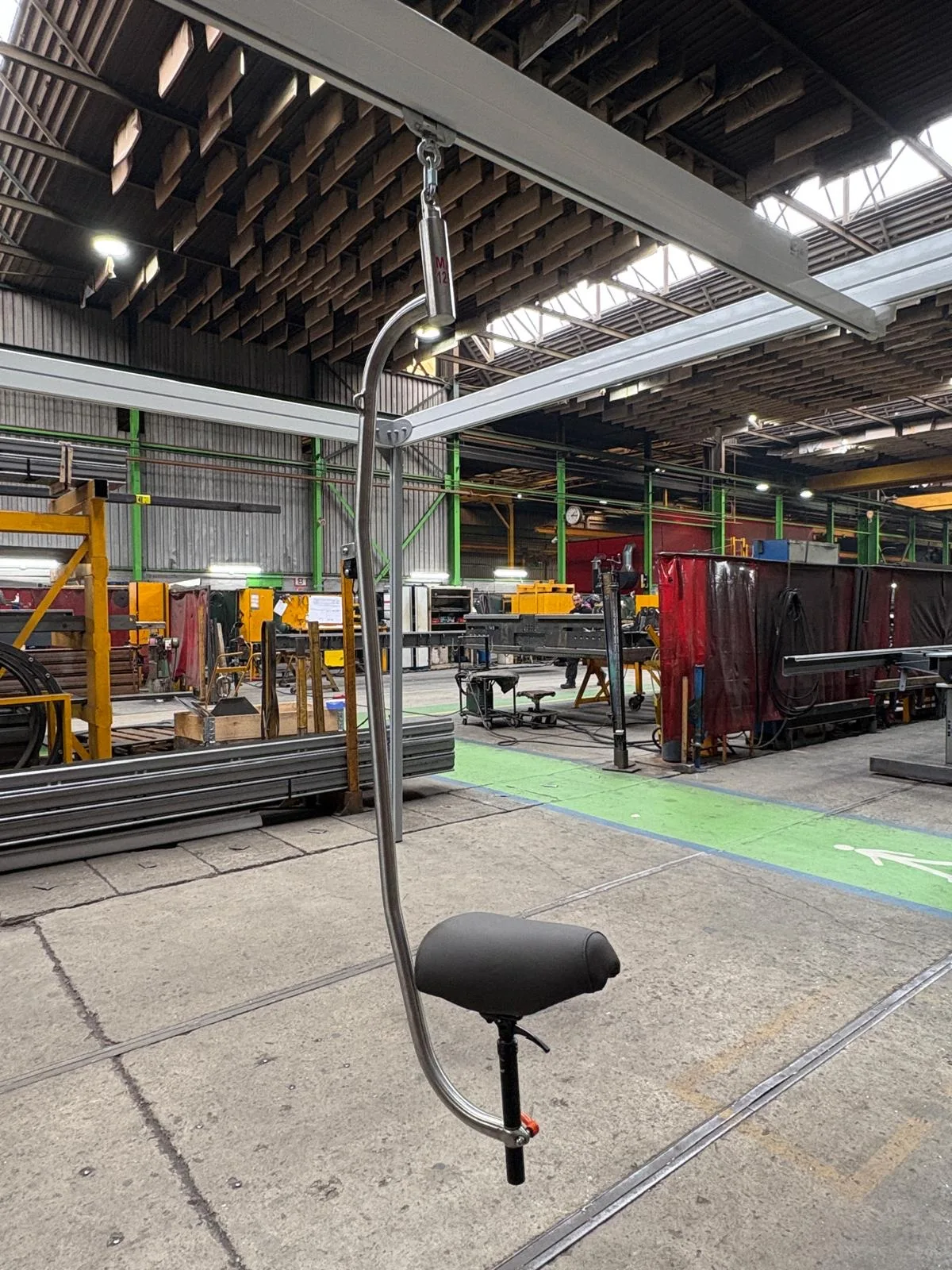
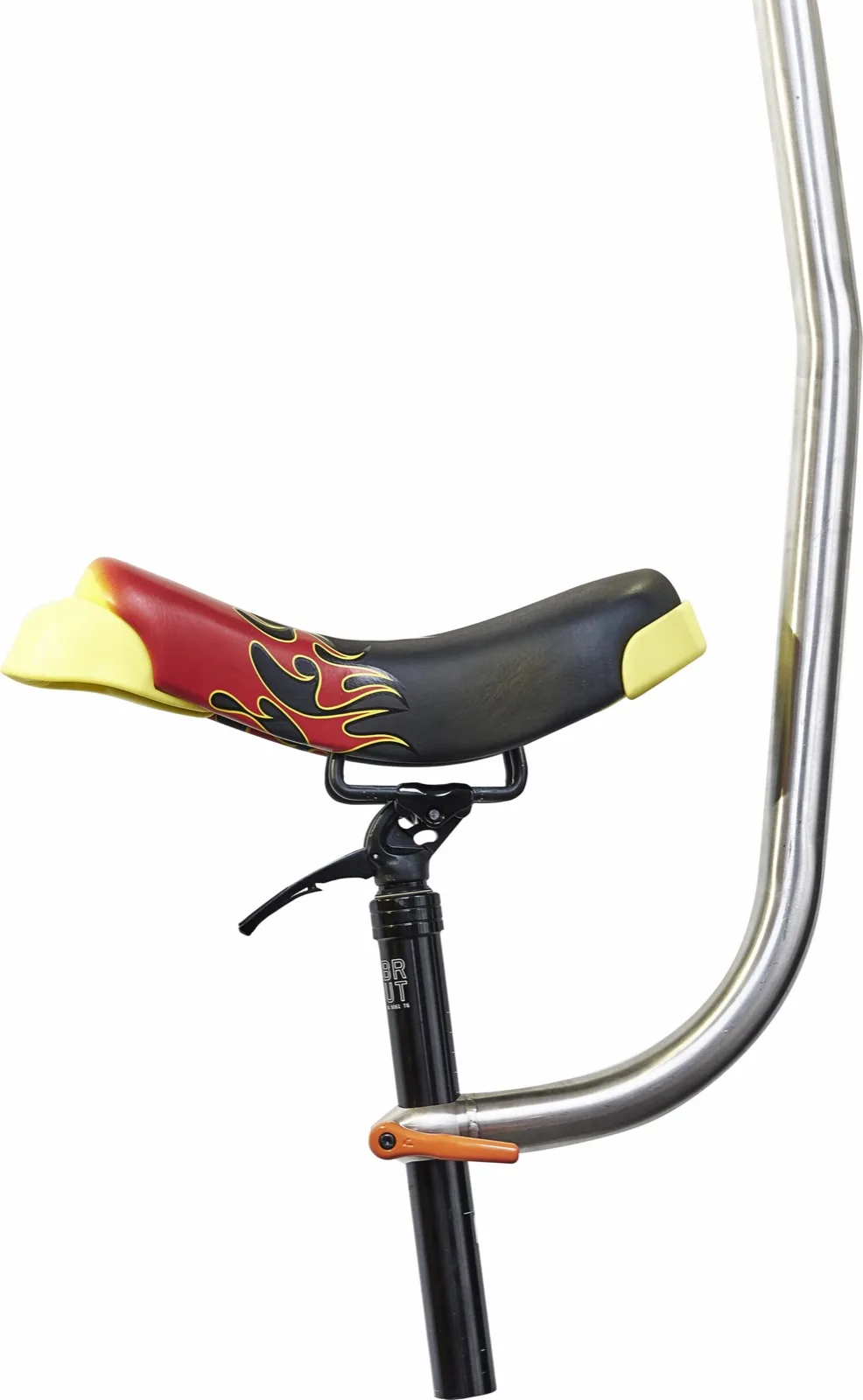
What Standing Ovation comes down to: a height-adjustable saddle on a curved tube. You sit on it, the system takes over part of your weight, and you carry on moving through the room as usual — with both hands free.
See how it worksWould this work on your shop floor?
In a showroom you see what it is. On your own shop floor you see whether it suits your work. That is why it always starts with a survey on location.