

Stay on your feet, without loading your legs
Standing Ovation is a rail system with a mobility support that takes over part of your body weight. You move freely through your workspace, with both hands free, while the load on legs, hips and back goes down.
Standing is not a resting position
Ask a chef, a hairdresser or a lab technician how many hours a day they spend standing, and you rarely get an answer. Standing is not a task that gets scheduled. It just happens, in between everything else.
To stay upright, the muscles in feet, legs, hips and back are under constant tension. That tension never fully lets go, because there is no moment of relief as there is when walking or sitting. The Dutch occupational health portal Arboportaal speaks of prolonged standing still as soon as it lasts longer than an hour at a time. The rule of thumb in Dutch industry health guidelines is short: no more than an hour at a stretch, no more than four hours a day.
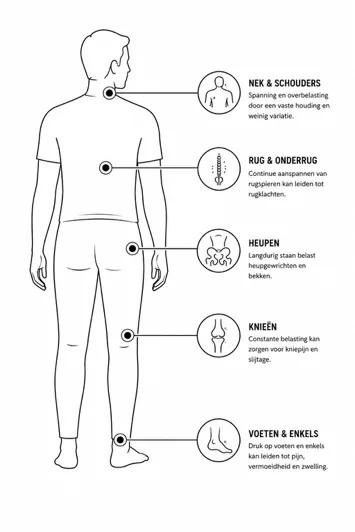
There is no single moment where it goes wrong. That is exactly why it carries on so long.
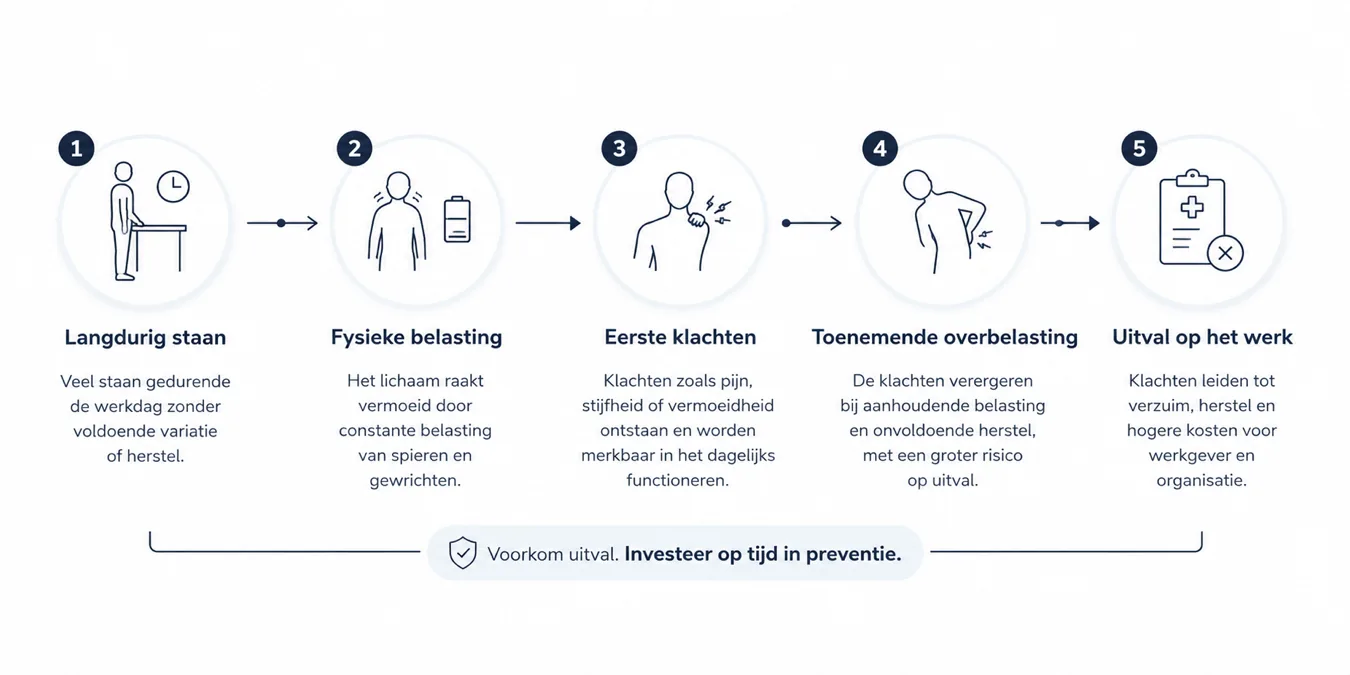
What physical strain costs an organisation
of employees in the Netherlands have musculoskeletal complaints
work-related days of absence stem from the musculoskeletal system
is what continued wage payment for that costs employers each year
Source: TNO and CBS, Netherlands Working Conditions Survey 2024
The effect does not stop at absence. Employees aged fifty and over in physically demanding work expect to be able to keep working healthily until 65.2. For colleagues without that strain it is 66.9. Almost two years of craftsmanship walking out of the door earlier.
The system
How it works
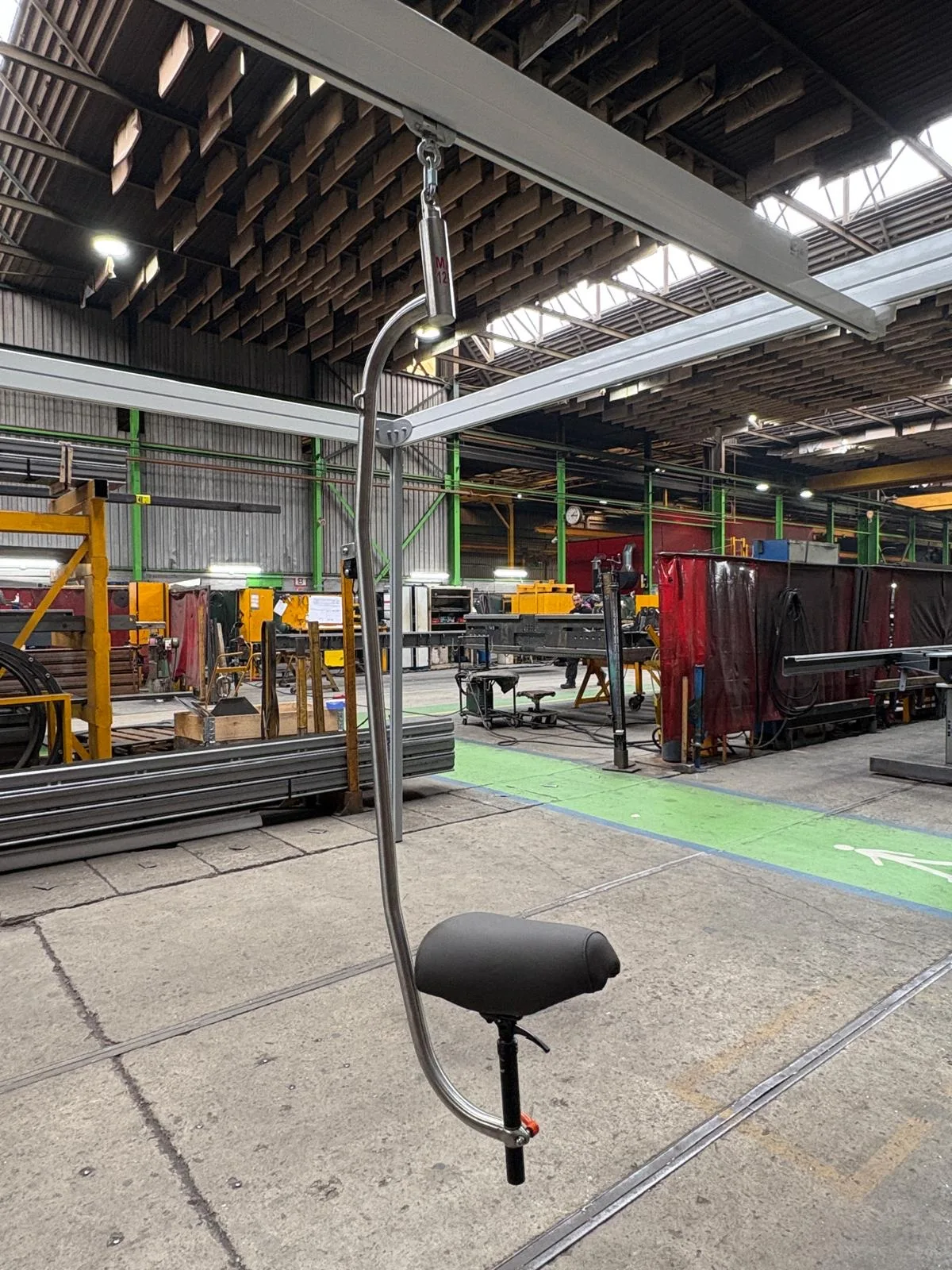
A rail runs above the workplace, fixed to the ceiling or on free-standing columns. From it hangs the Standing Ovation mobility support: a frame with a saddle that adjusts for height. You sit on it and the system takes over part of your weight, while you simply carry on moving through the room.
- Fully mechanical: no power, no battery, no app.
- You decide where you go; the system moves with you.
- Both hands free, so you carry on with your work.
- The rail system is built to measure for the space.
- The saddle comes in several versions, so it suits the user.
- If more support is needed, there is a harness developed specifically for the mobility support.
- Patented and CE-certified as a medical device.
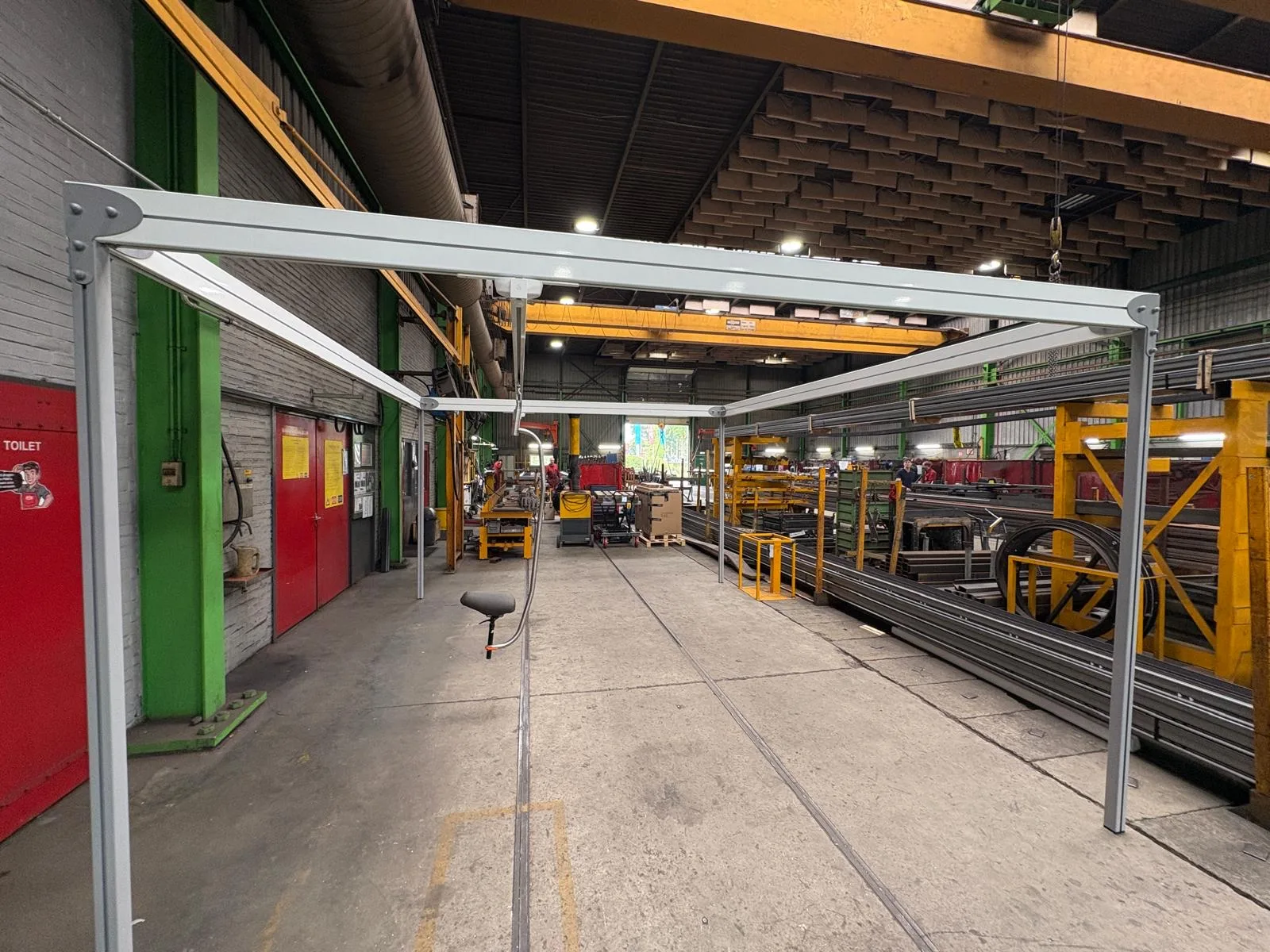
Three configurations
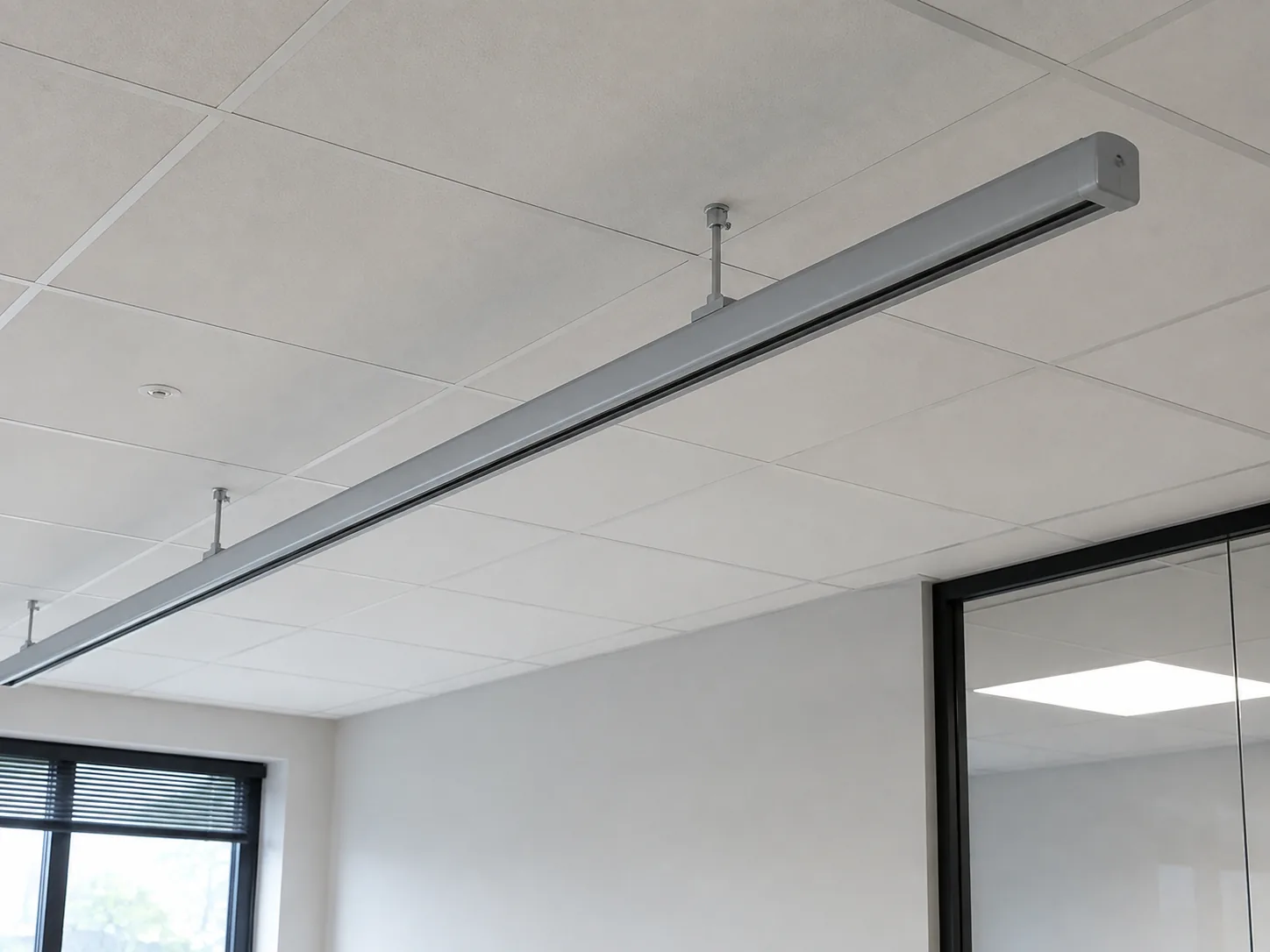
Single rail
The mobility support moves along one line. Suitable for a workplace where someone mainly moves back and forth, such as an assembly bench or a service desk.
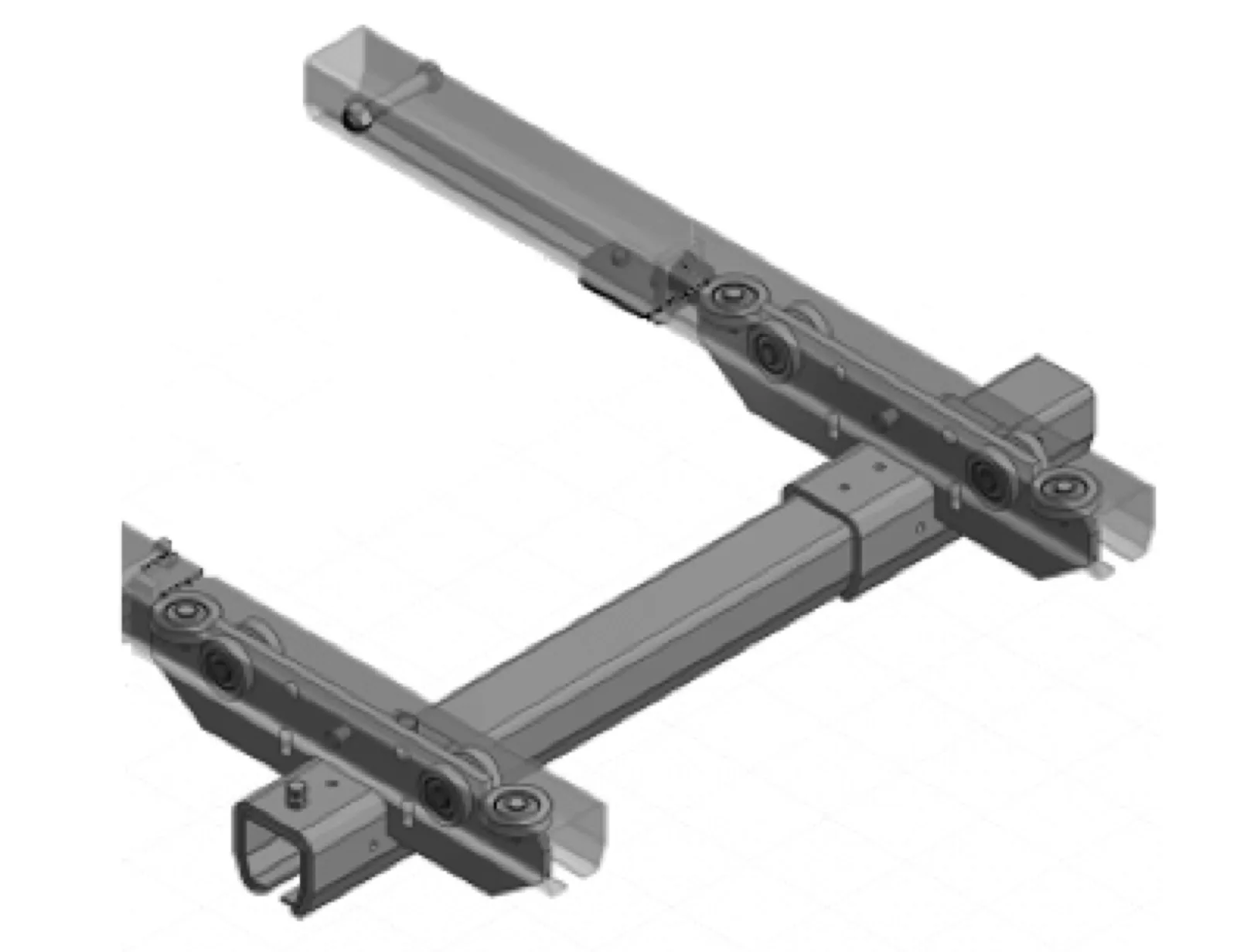
X-Y system
Two rails at right angles, one sliding over the other. That makes every point in the room reachable. This is the configuration for work where someone has to move in all directions, such as in a kitchen.
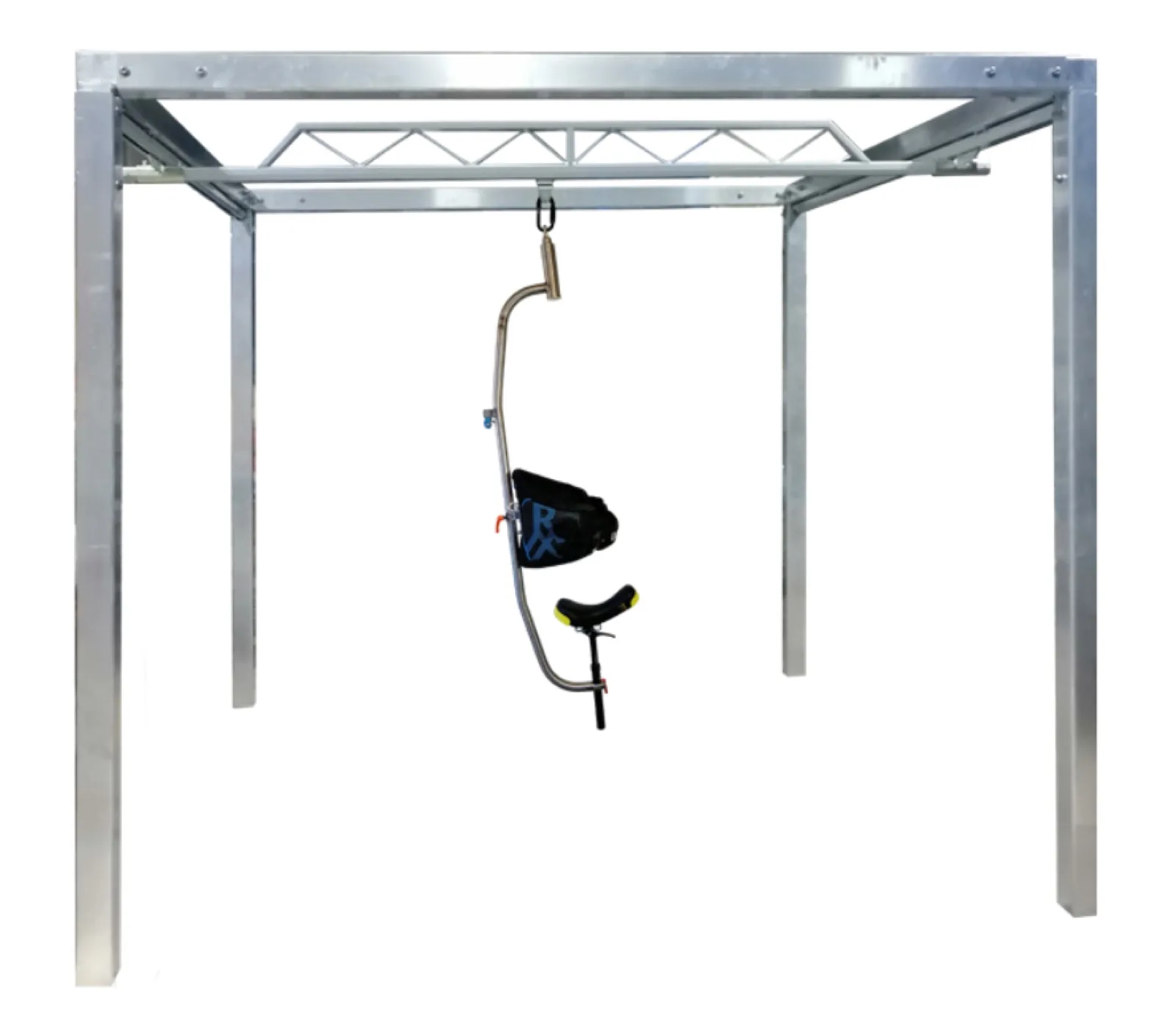
Free-standing columns
For spaces where the ceiling cannot carry the structure or where drilling is not allowed.
Where this fits
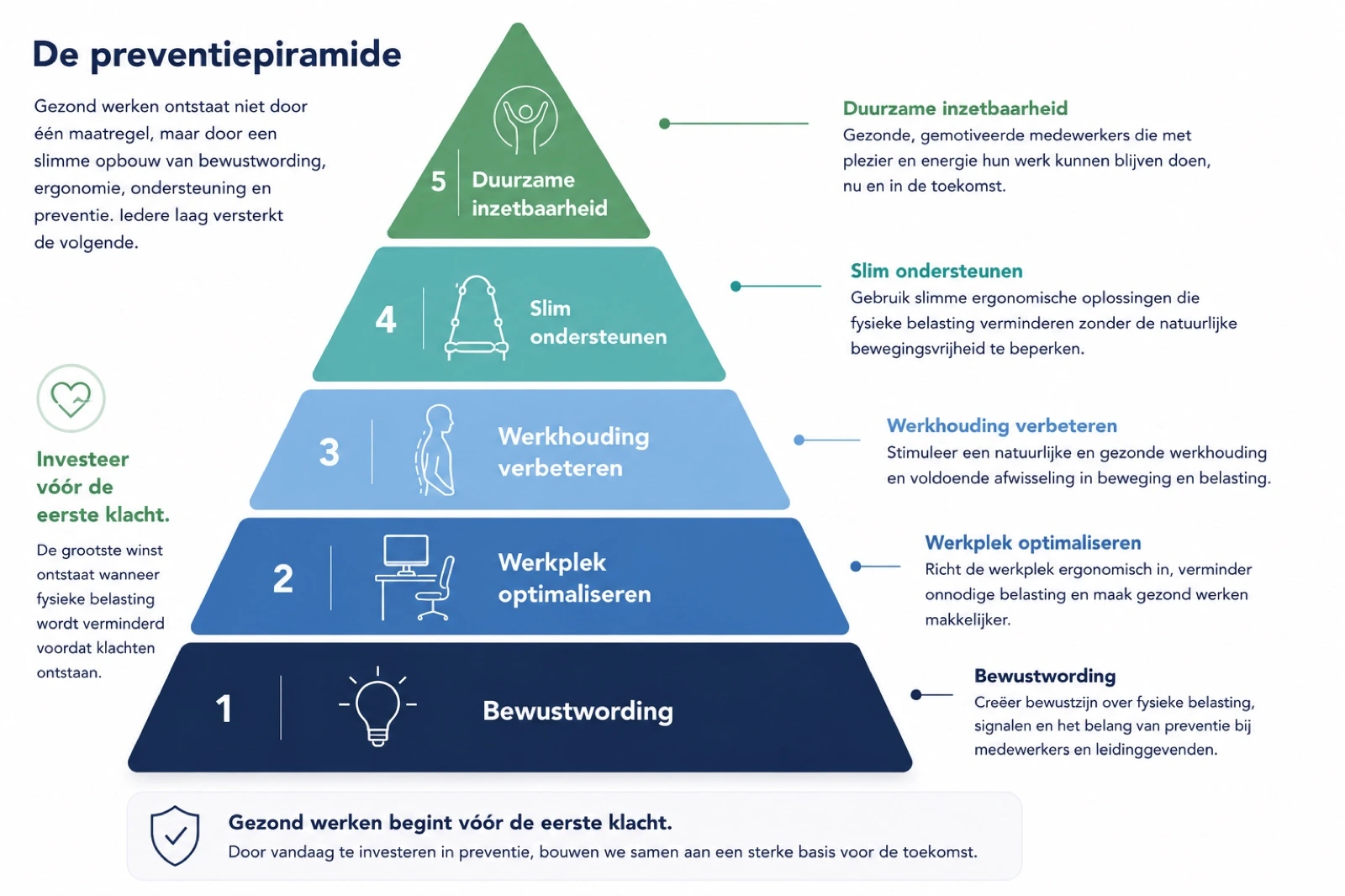
The five layers of the prevention pyramid
Standing Ovation belongs in layer four: physically taking over part of the load, once the workplace has been set up and the work remains standing work. The three layers below it are cheaper and come first.
Applications
Where Standing Ovation makes the difference
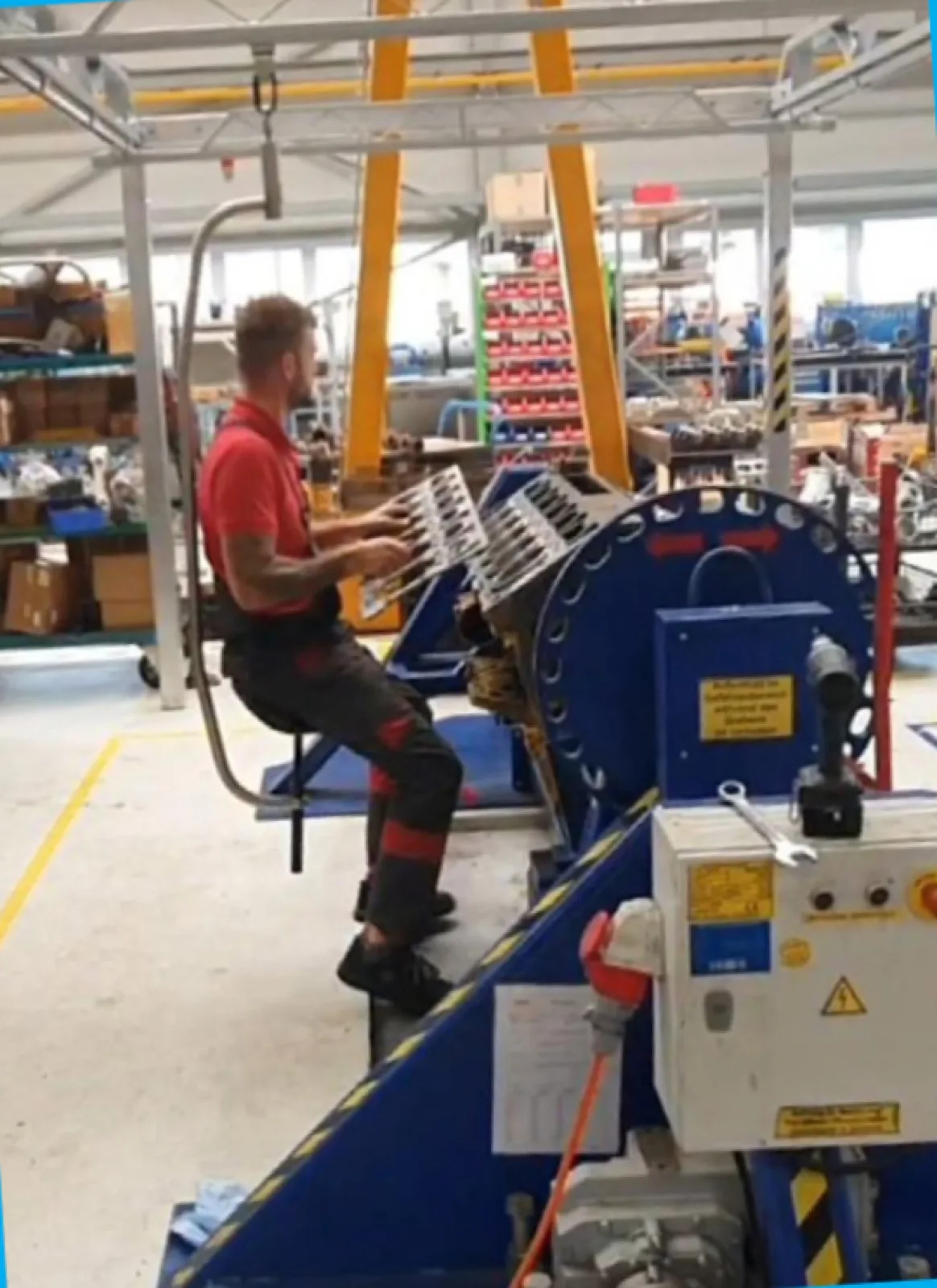
Prevention
Invest before the first complaint. Lower the daily load at posts where standing work cannot be designed out of the process.
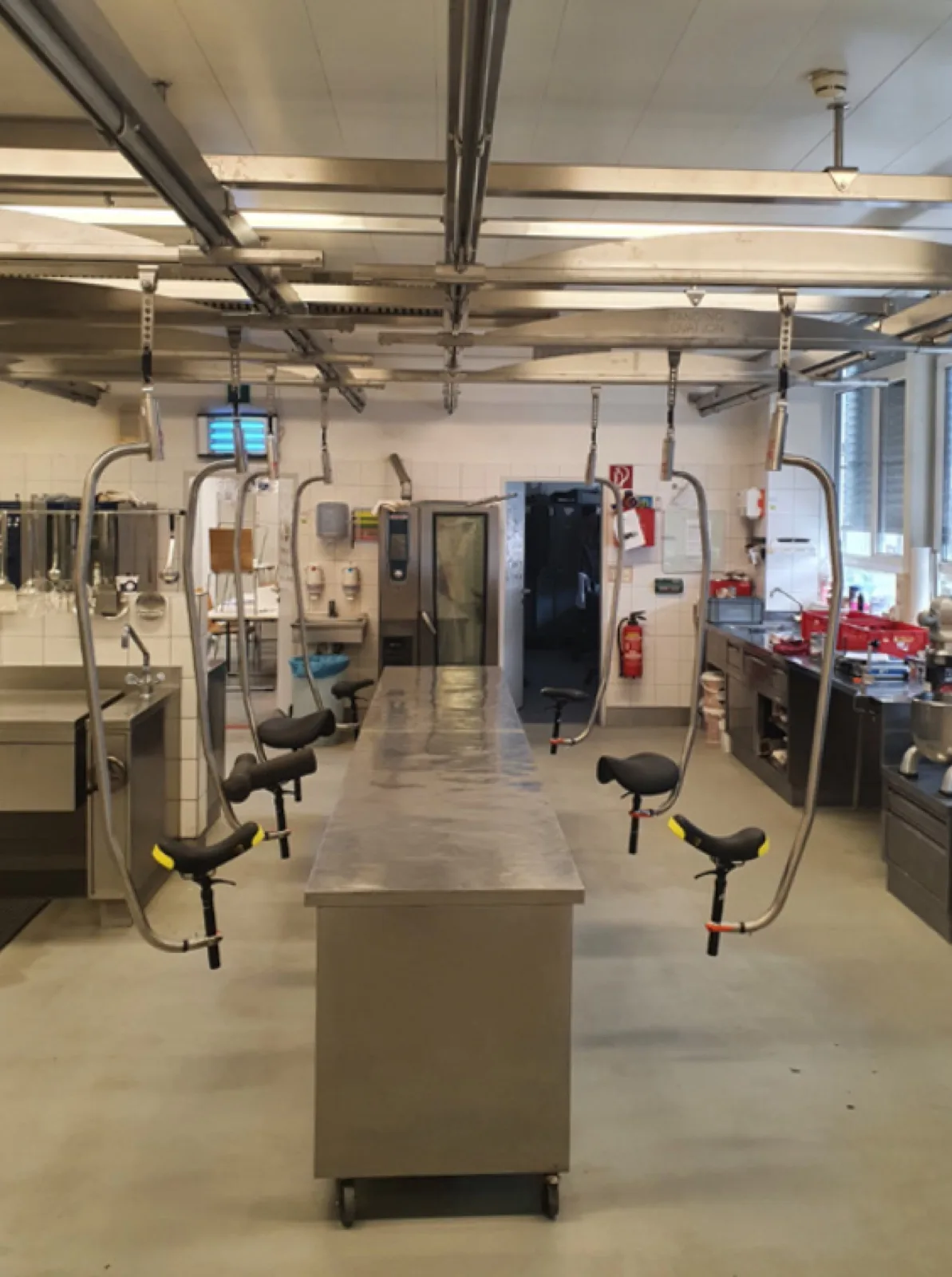
Working healthily
More comfort through every working day. Less fatigue at the end of the shift, and more energy left over for home.
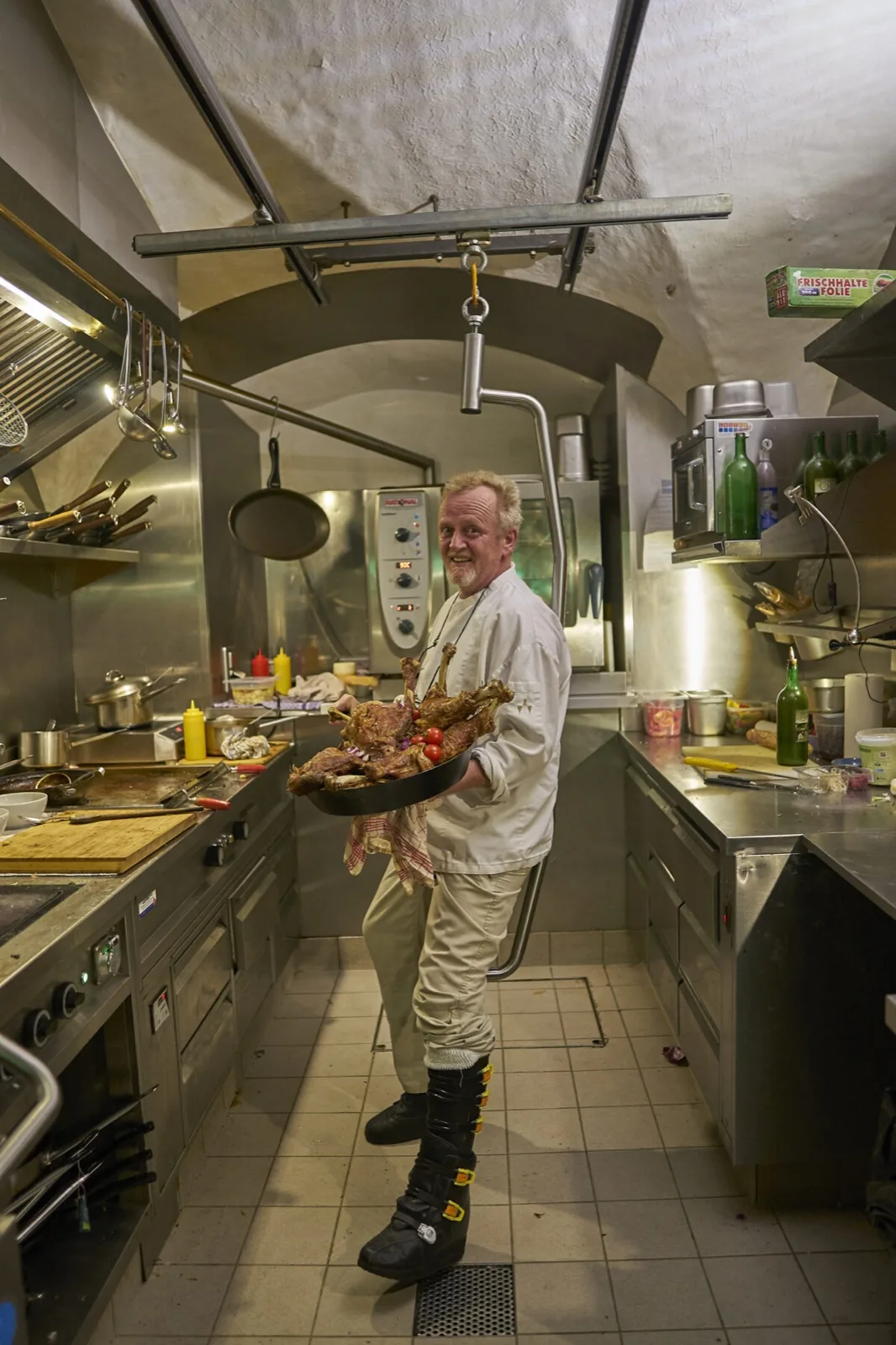
Staying in work
Keep working when extra support is needed. For employees with a physical limitation, a chronic condition or reduced capacity.
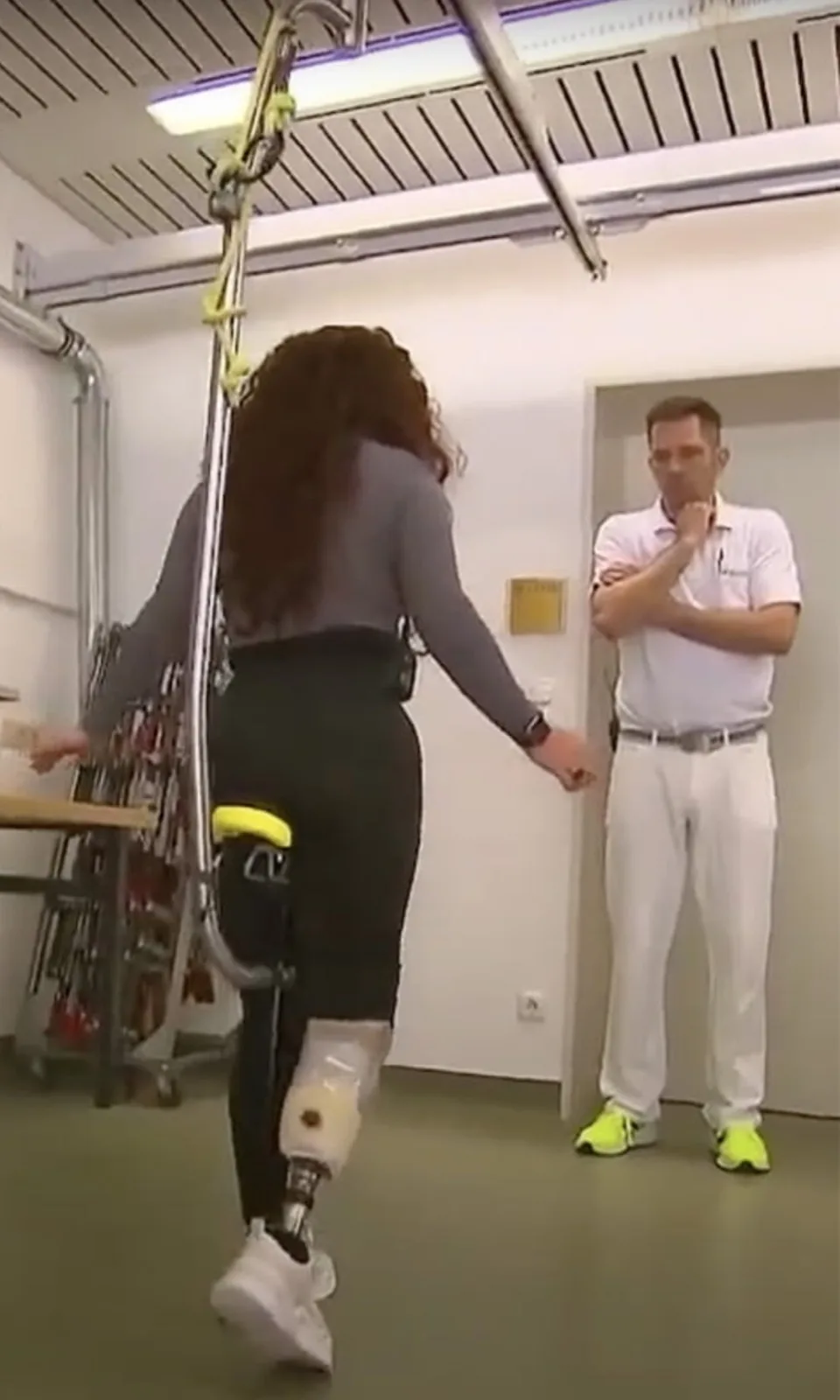
Rehabilitation & therapy
Support during recovery and the return to work. Within a rehabilitation or reintegration programme the load can be built up gradually, matched to what someone can manage.
Working environments
In which working environments
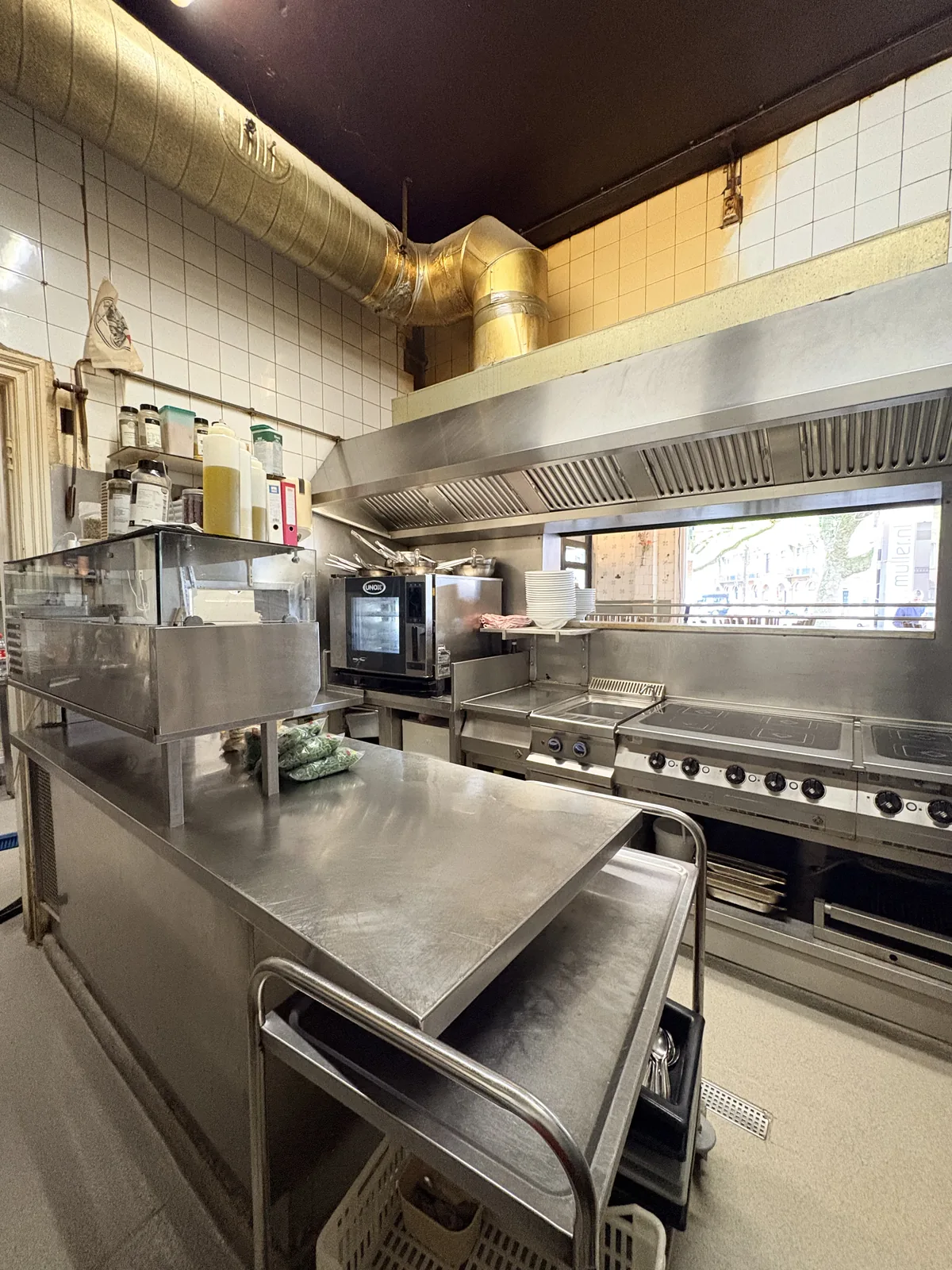
Hospitality
Hours on one spot at a hot line, with little room to swap.
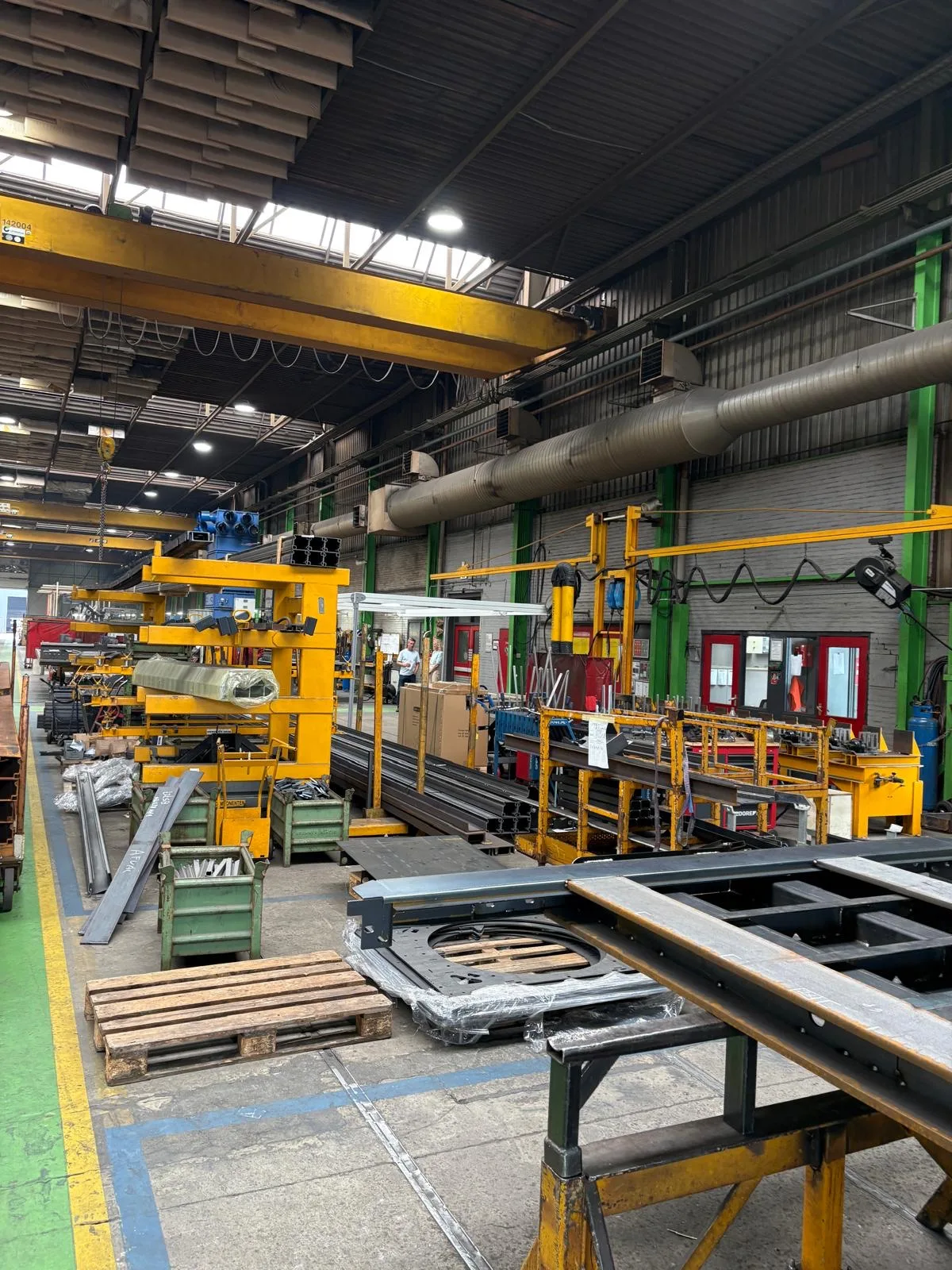
Industry and production
Repetitive work and reaching, at posts you cannot simply rotate.

Logistics
Long shifts on your feet, with peaks that cannot be postponed.

Laboratories
Standing still at the fume cupboard, precision work with both hands.
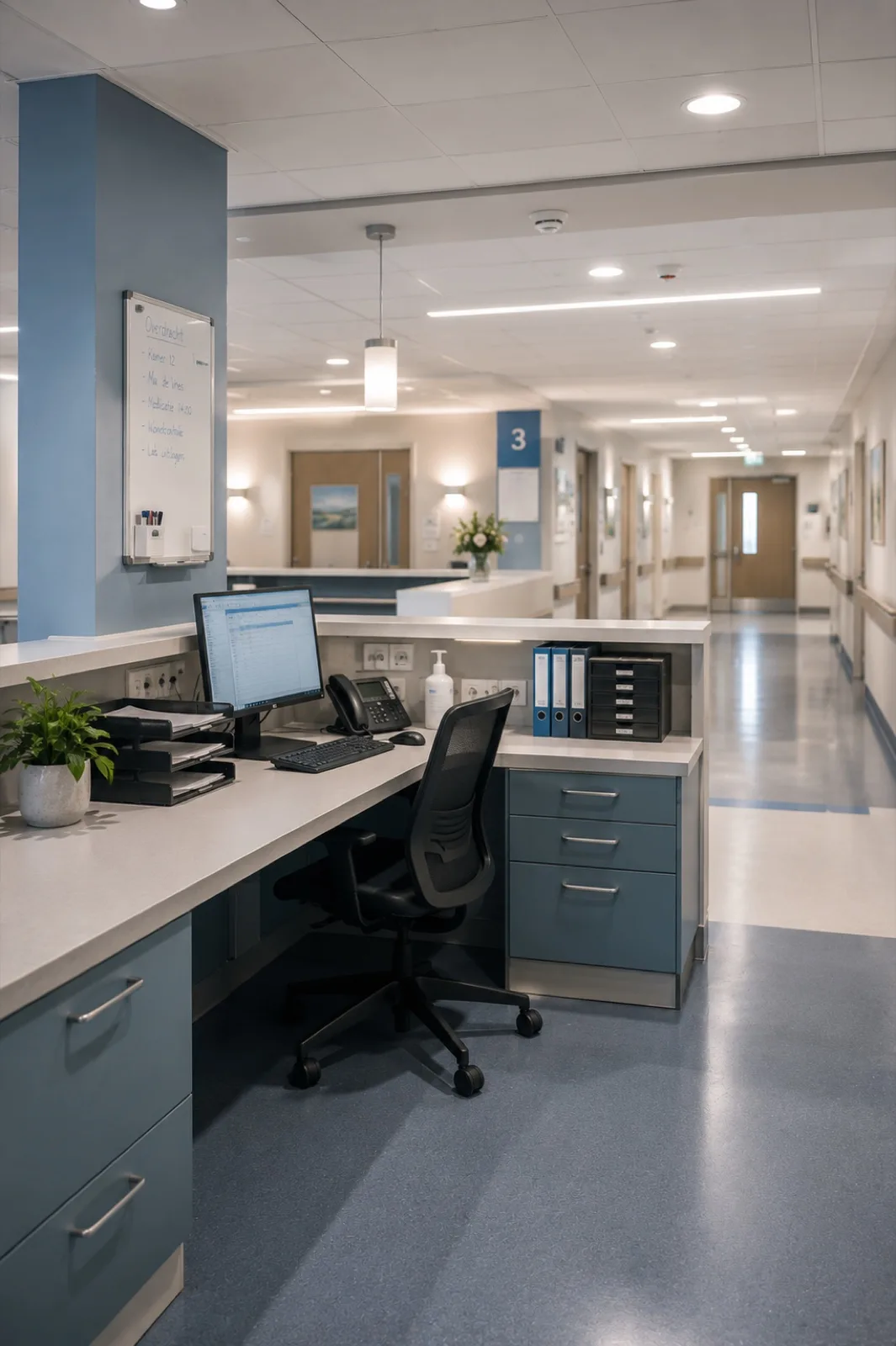
Care
Standing work combined with lifting and bending.
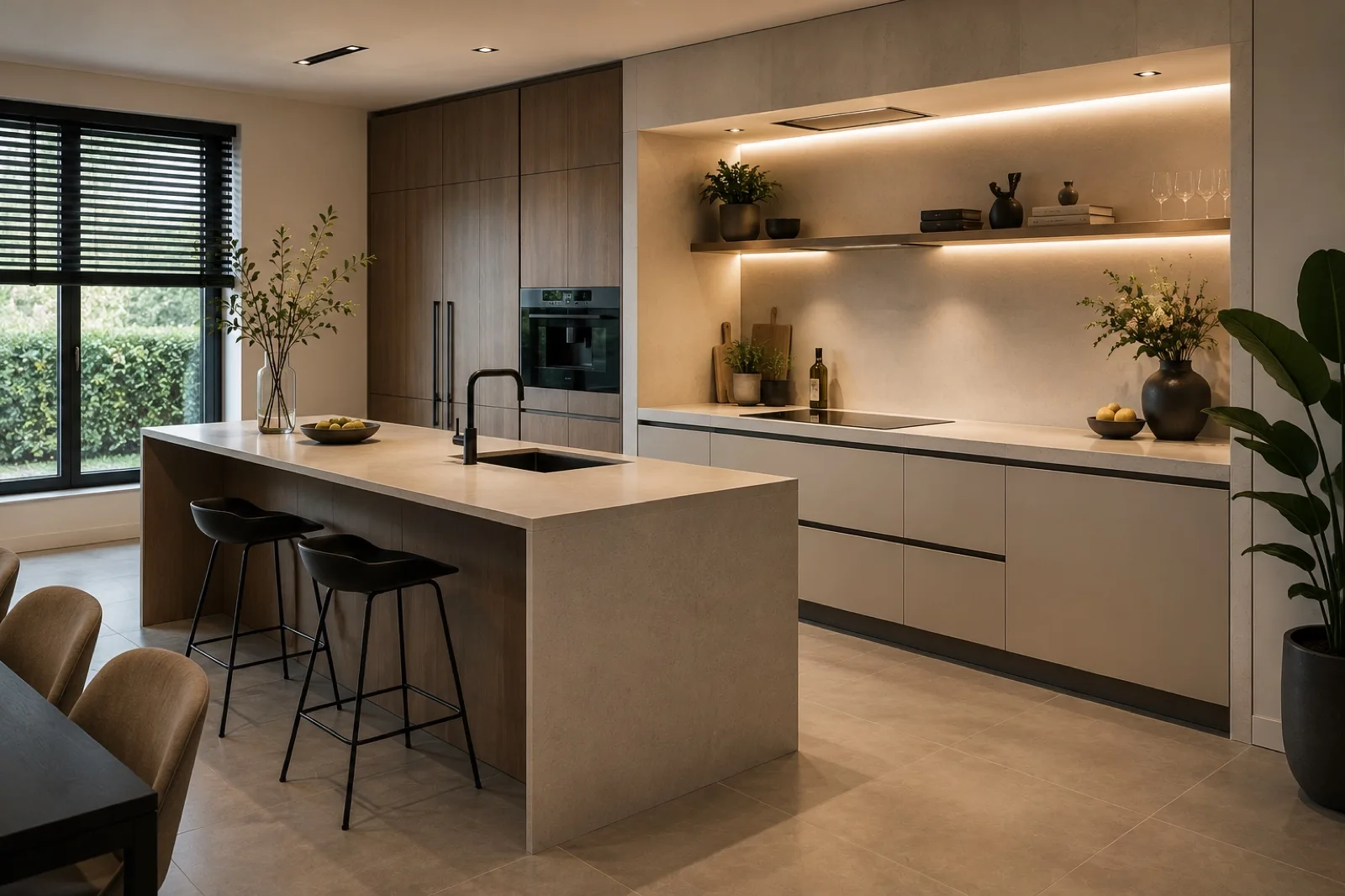
At home
At home too, Standing Ovation offers extra support — in the kitchen, for example. Stand and move with support in your own kitchen or workspace, comfortably occupied, outside work as well.
Experiences from practice
Two workplaces, two set-ups
The same system twice, and yet two completely different solutions. In a kitchen an X-Y system was installed because a chef has to move in all directions; in a production hall a free-standing gantry, because overhead cranes run above the shop floor.
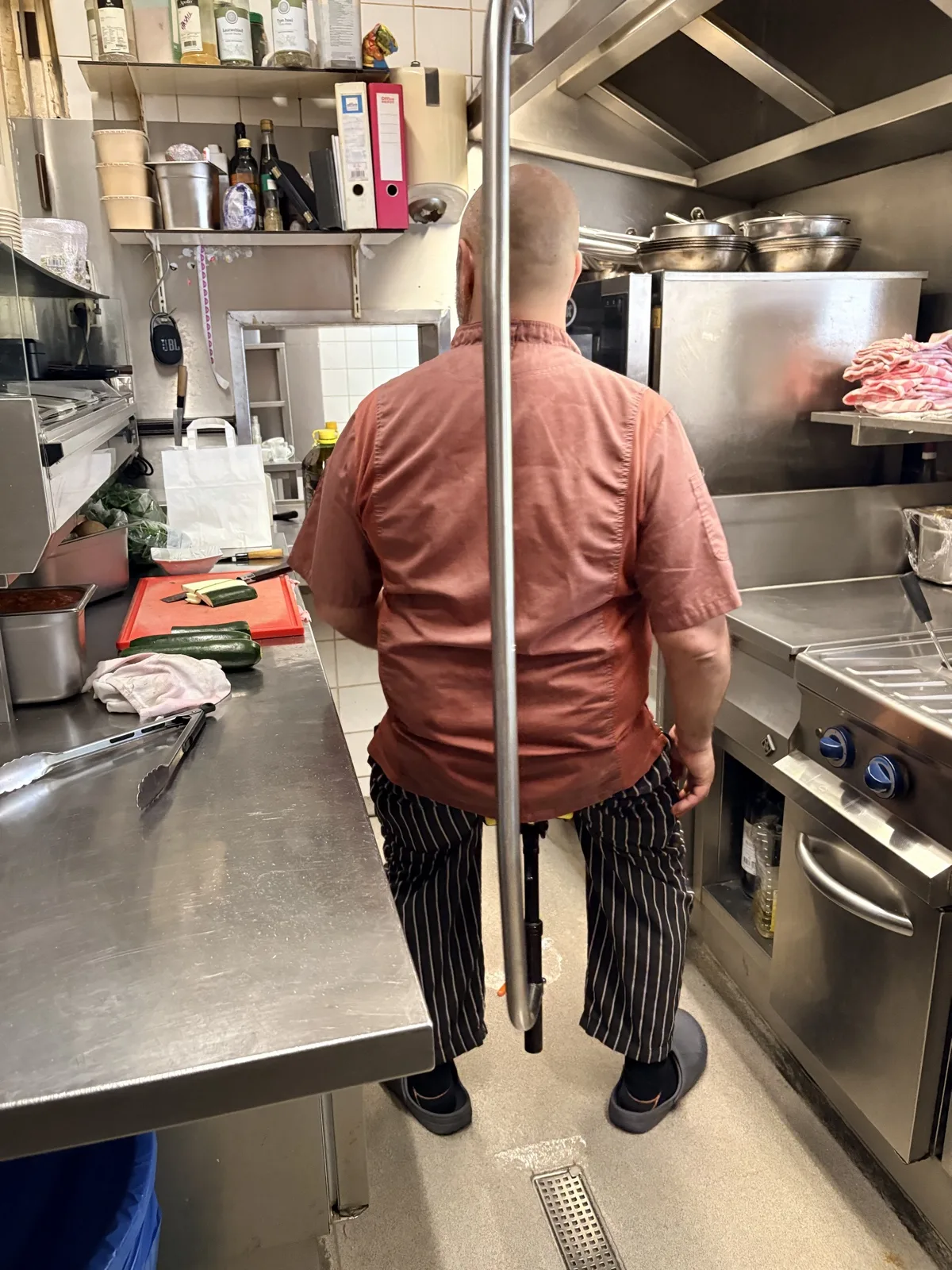
He spent his whole career in the kitchen of an Italian restaurant. After an accident he could no longer stand and walk through a full shift, and stopping seemed inevitable. His employer thought otherwise. He still stands in his own kitchen.
Read howAn employee could put less and less weight on one leg, which made standing for long periods and walking a lot more difficult. His employer adapted the workplace rather than moving him: a height-adjustable work bench and a free-standing set-up. Entirely at its own expense.
Read how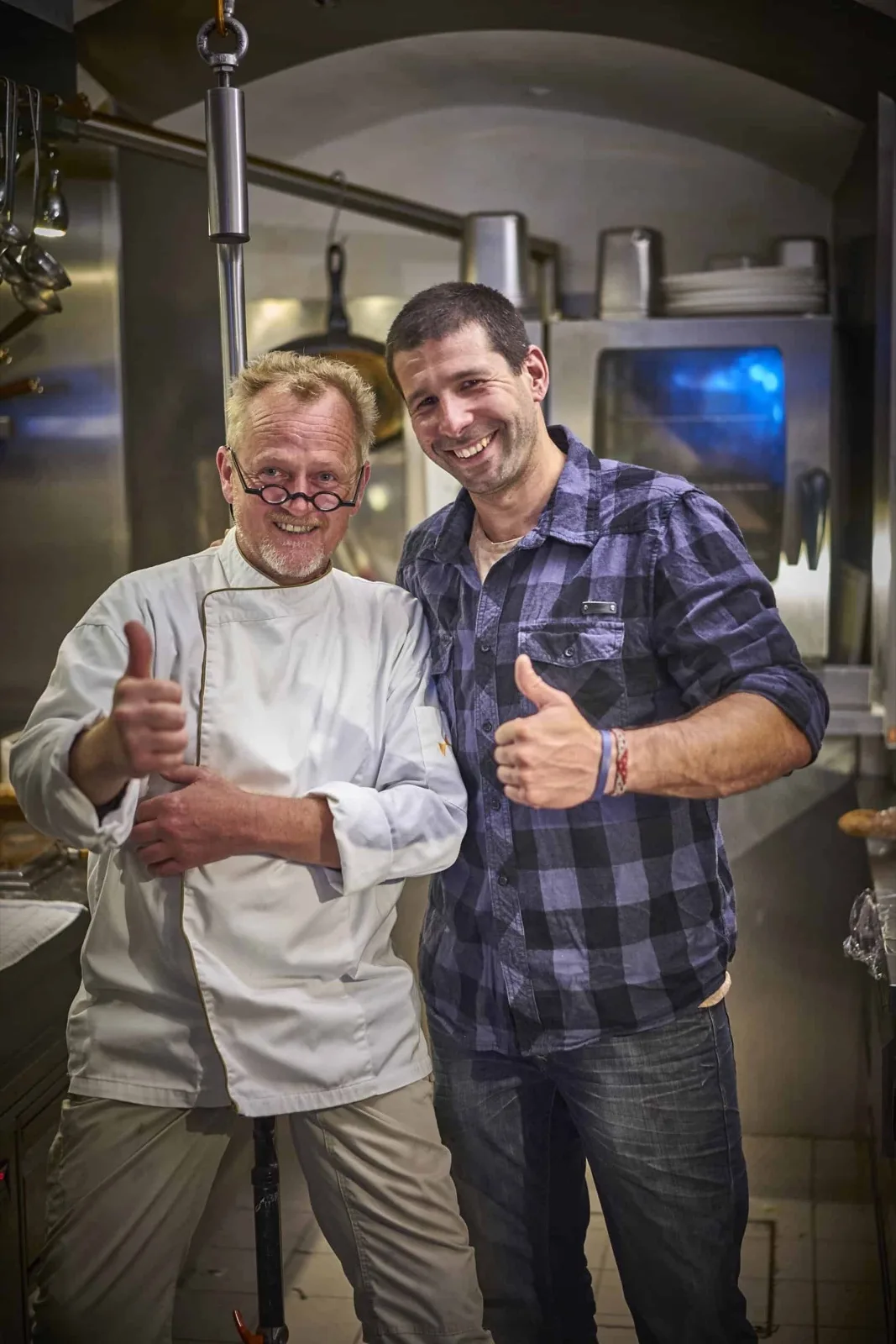
The story
Devised by someone who could no longer stand himself
Peter Lammer was a chef and ran a restaurant in Salzburg. After a serious road accident, with eighty per cent occupational disability, he could no longer practise any standing profession. There was no aid that would let him back into his kitchen.
So he built it himself, together with his friend and business partner Bernhard Tichy: a rail overhead and a mobility support that takes over part of your body weight, while you keep moving freely through the room. No power, no app. Peter stands in his own kitchen again.
What began as a way to come back turns out to work just as well to prevent anyone from ever having to leave.
Practical
What you want to know before you call
That depends on your workplace, and that is not an evasive answer. A single rail above one work table is something other than an X-Y system covering a whole kitchen, or a free-standing set-up that brings its own structure.
What determines the price: the configuration, the span and the area that has to be reachable, whether it can be fixed to the building, and the on-site installation.
That is why it always starts with a survey on location. After that you receive a quotation setting out the cost per component. No lump sum without substantiation, and no items appearing afterwards.
In most cases a system is up within a day. After that it is ready for use straight away: nothing has to be configured, connected or calibrated, because there is no electronics in it. Someone who did not have it in the morning is working with it in the afternoon.
Less than you would think. The mobility support travels along a rail, and that rail can be mounted to the ceiling or placed in a free-standing set-up on its own columns. If the structure is not suitable, or drilling is not allowed, the system carries itself.
In practice the building is therefore rarely the reason it cannot be done. At one production company a set-up stands in a hall where overhead cranes run above the shop floor: not a single hole was drilled in the building. What is possible in your situation follows from the survey.
Yes. The system can be dismantled and rebuilt at a new location.
The mobility support itself — the part you lean on and move around with — always comes along. Whether the rail can be reused depends on the new space: the span, the height and whether it can be fixed to the ceiling. With a free-standing set-up that is usually simpler than with a rail mounted to measure on an existing ceiling.
A move or a refit therefore does not make the investment worthless.
That depends on the situation, and there are more routes than most people think.
- The employer. That happens regularly: keeping an experienced employee weighs more heavily than the purchase.
- UWV (the Dutch employee insurance agency), through an application for an employer provision when retaining an employee.
- A liability insurer, when the limitation results from an accident for which someone else is liable.
- In the home situation it can in some cases run through the Wmo (the Dutch social support act) or a damage insurance policy.
We know these routes and think along with the application. We do not promise amounts or percentages, because that is assessed case by case.
The system can be checked annually against the manufacturer and safety requirements: the rail, the mobility support and the accessories attached to it, such as a harness. Because there is no electronics or battery in it, this is a mechanical check of the structure, the fixing and the moving parts.
We recommend that annual check. An employer is responsible for the safety of the work equipment on the shop floor, and this is a structure that carries an employee's body weight.
We carry out the inspection ourselves. You can take out a maintenance contract for it, separately from the purchase.
Knowledge base
Standing Ovation Academy
Knowledge about physical strain, prevention and ergonomics, for employers, HR and occupational health professionals.
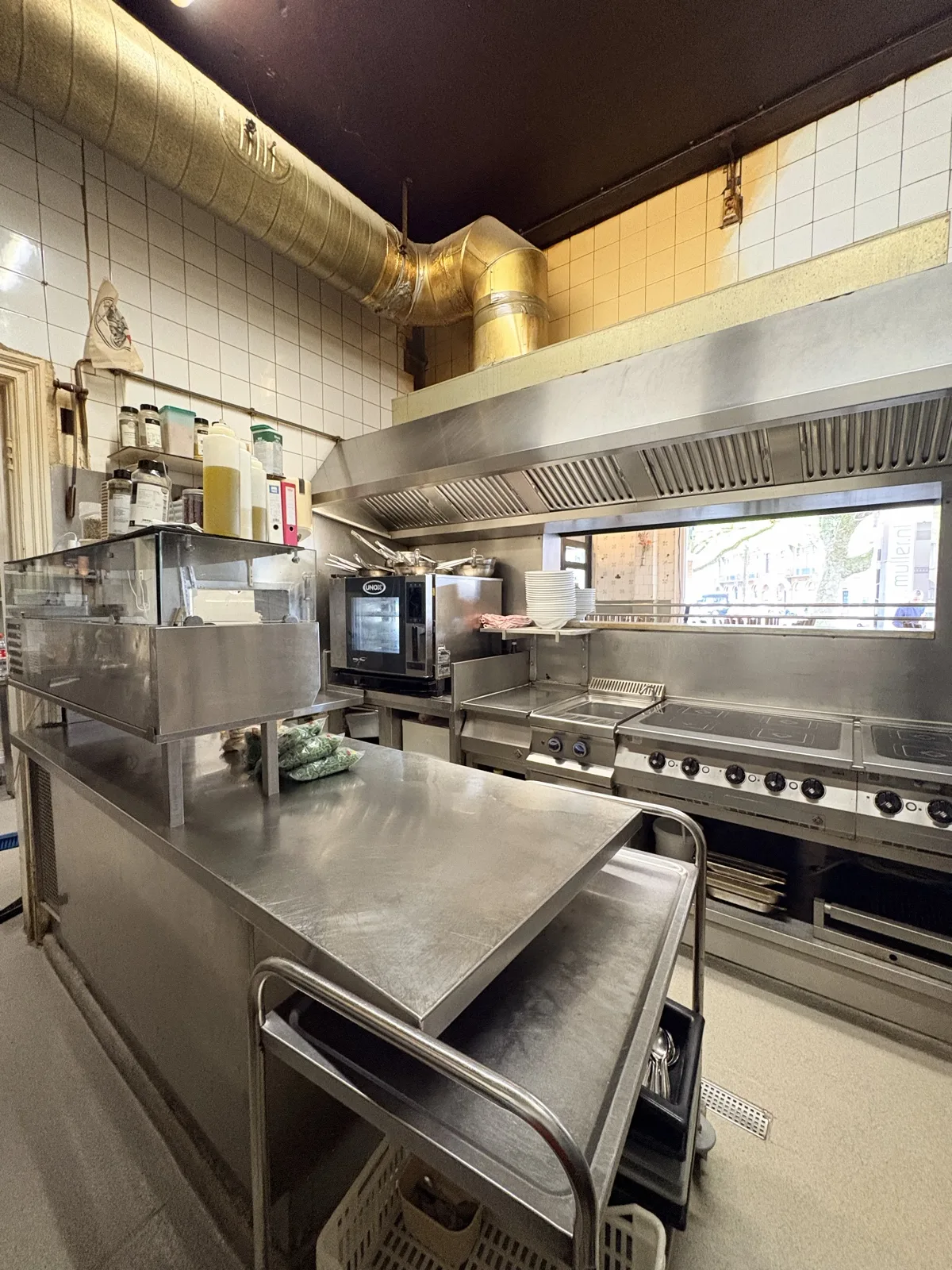
Prolonged standing: where is the limit?
What happens in the body during standing work, and which hourly norm applies.
Read the articleSpotting physical complaints before anyone reports them
What you see as a manager, once you know what to look for.
Read the article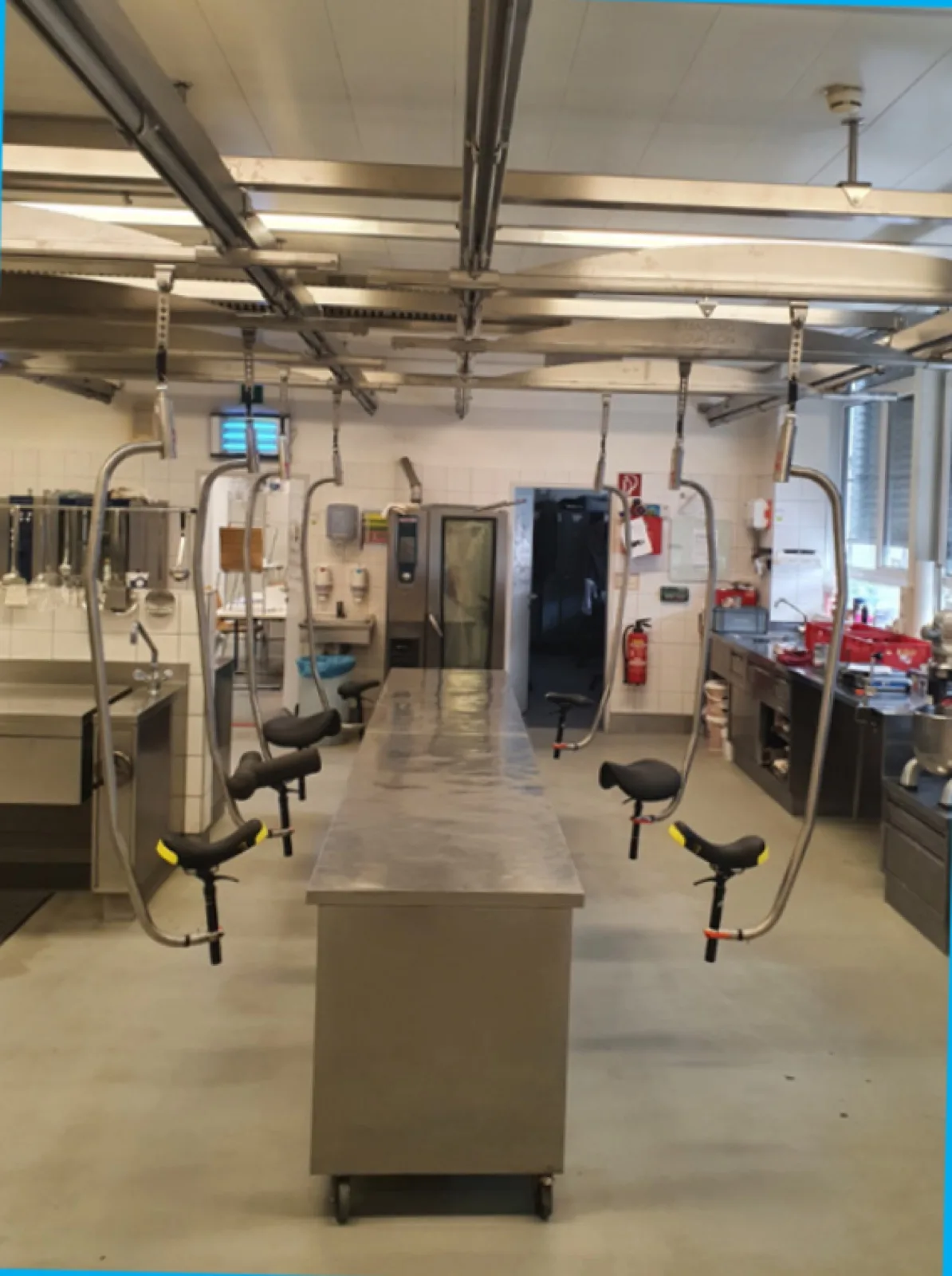
How do you prevent physical overload on the shop floor?
Five steps, from free to investment.
Read the article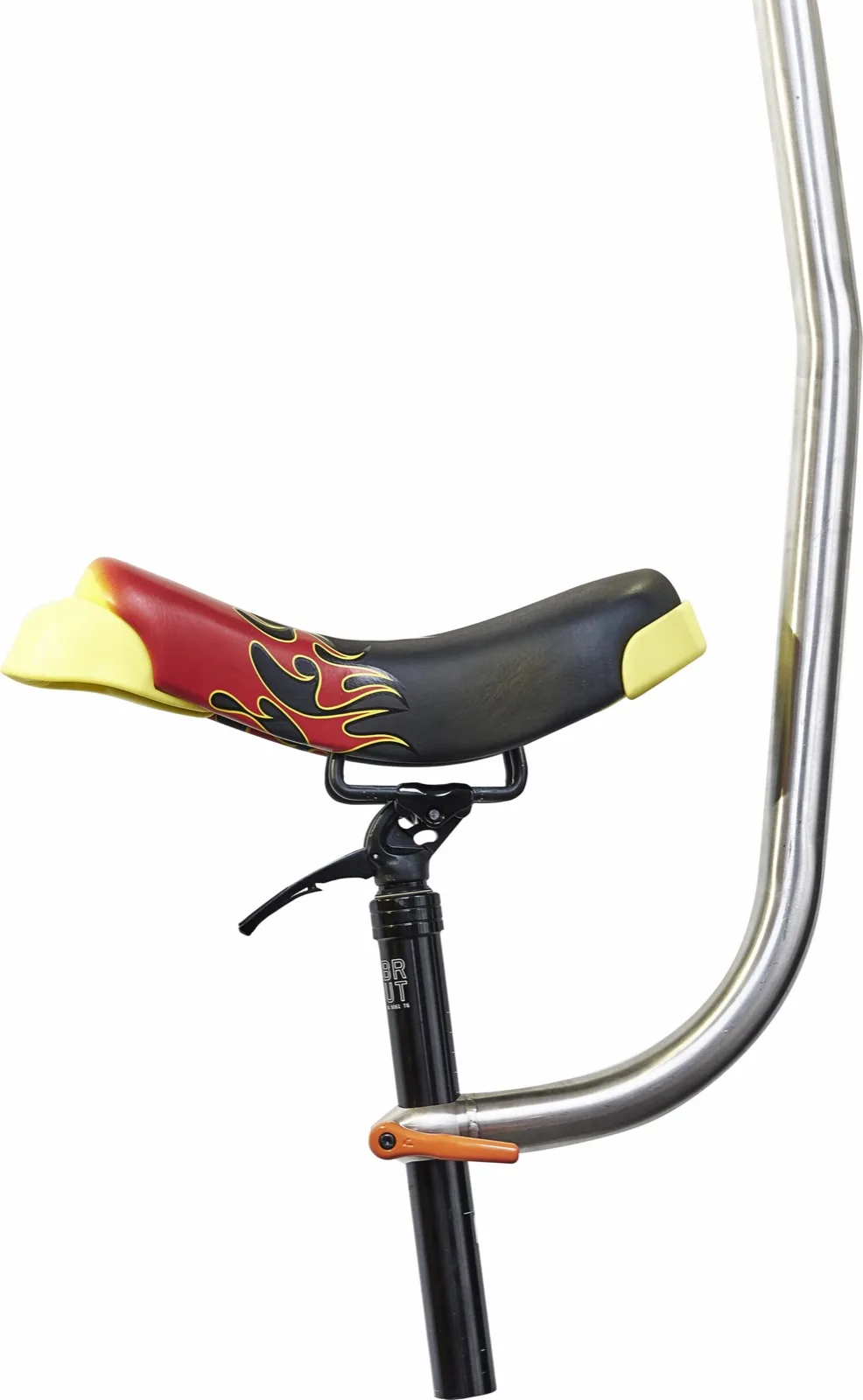
The solution
What Standing Ovation comes down to: a height-adjustable saddle on a curved tube. You sit on it, the system takes over part of your weight, and you carry on moving through the room as usual — with both hands free.
See how it worksCome and see it for yourself
Every workplace is different. That is why we would rather show it than explain it.
Later this year you will be able to see the system in our showroom in Druten. But the real answer to whether this suits your work comes on your own shop floor: we visit for a survey, watch how the work is done and let you try it out on the spot.