
You ask at the end of the shift how it went. “Fine.” And that is not a lie. At that moment they genuinely think it is fine.
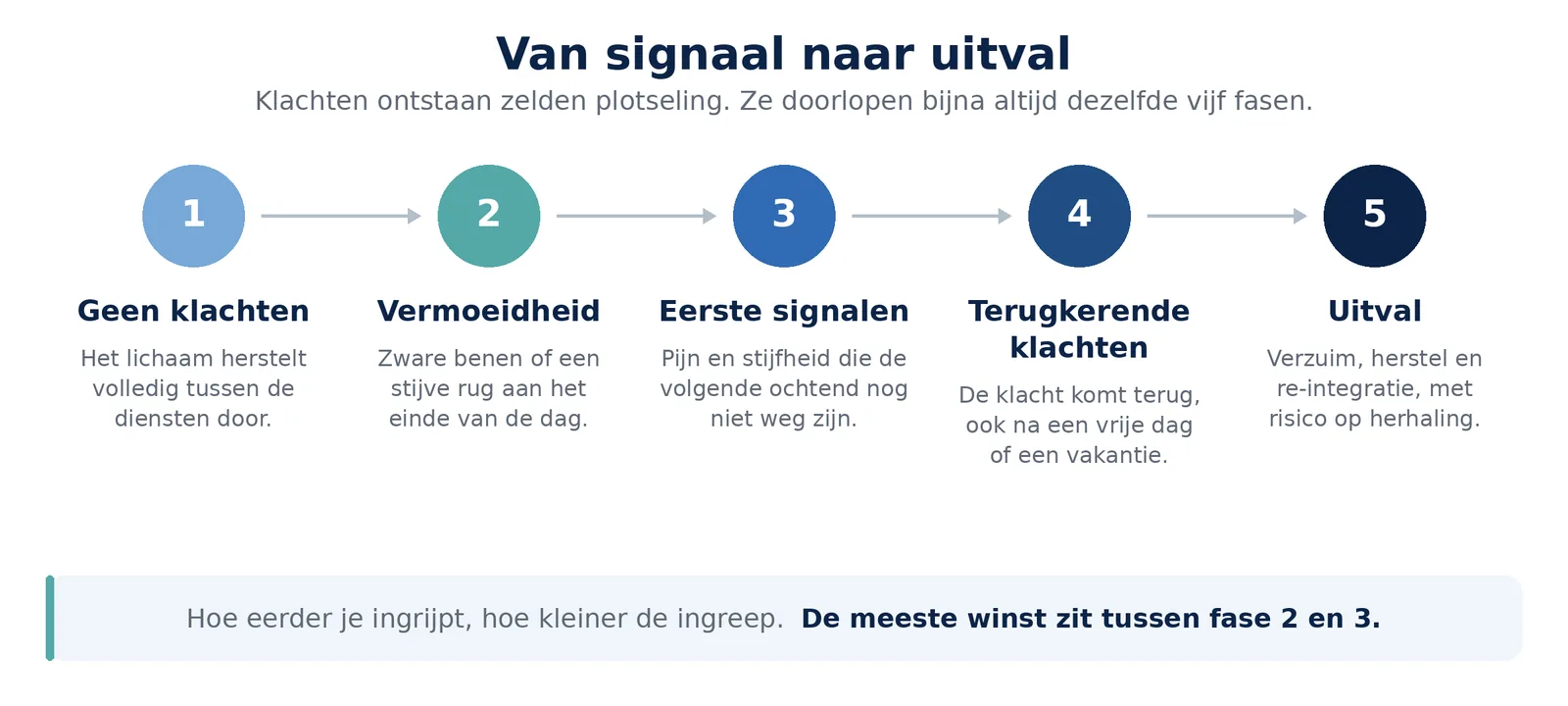
That is where the problem sits. Physical strain does not report itself. It creeps up until it is part of the trade, and by the time someone says something about it, it has usually been going on for years.
Why nobody reports it
There are three reasons, and the third is rarely written down anywhere.
The first is loyalty to colleagues. Whoever complains about their back passes work on to someone else. In a team that is already stretched, you do not do that lightly.
The second is habituation. Tired legs after a shift become part of the profession, just like getting up early.
The third is the most honest: reporting feels risky. Anyone who says the heavy work is heavy fears being scheduled less, being moved to lighter tasks, or getting a reputation as someone who can no longer manage. As long as that fear is there, the question “do you have any complaints?” always gets the same answer.
What you can see
People hide their complaint, but not their behaviour. These signals are visible without your having to ask anything:
- Someone shifts their weight from one leg to the other more and more often, or leans against the bench in between.
- The stretching movement when straightening up from a bent posture, every single time.
- Breaks get chopped into brief moments of walking away, or are taken longer than needed.
- The pace drops in the last hour of the shift, while the work has not changed.
- Someone structurally avoids a particular post. Or keeps claiming the post where they can sit.
- Sighing when bending down. That is not grumbling; it is a breathing response to load.
None of these signals means anything on its own. In the same person, over a few weeks, together they do mean something.
The figures say they have known for a long time
Of all employees in the Netherlands, 60% have musculoskeletal complaints (TNO and CBS, NEA 2024). In that same survey, 29% of people doing physically heavy work indicate that additional measures are needed.
Read those two figures side by side. Almost a third of your people already think something needs to happen. They just have not said it to you.
How to ask
“Do you have any complaints?” gets you a no. It is a yes-or-no question about a medical concept, and nobody likes to see themselves as a patient. These three questions work better:
- “Where do you feel your work at the end of the day?” It is about sensation, not illness. This almost always gets an answer.
- “Which task would you hand over first if you could?” Exposes the heaviest post without anyone having to complain.
- “Do you still do at home what you did a year ago?” The strongest of the three. Anyone who has given up their sport, garden or hobby is further along than the absence figures show.
What not to do
Do not tie this conversation to absence records or to a performance review. As soon as an answer ends up in a file, the third reason in this article is confirmed and nobody reports anything again.
Ask about it on the floor, in passing. And then do something with it. Asking once and doing nothing is worse than not asking.
What it gains you to see it earlier
Spotting it early means you still have a choice. Adjusting a roster, redesigning a post, distributing tasks differently: those are cheap interventions as long as there is no complaint yet. Once someone calls in sick, that changes. Then you are dealing with cover, with the occupational physician and with a reintegration process — and the workplace that caused it is still the same.
Where Standing Ovation fits
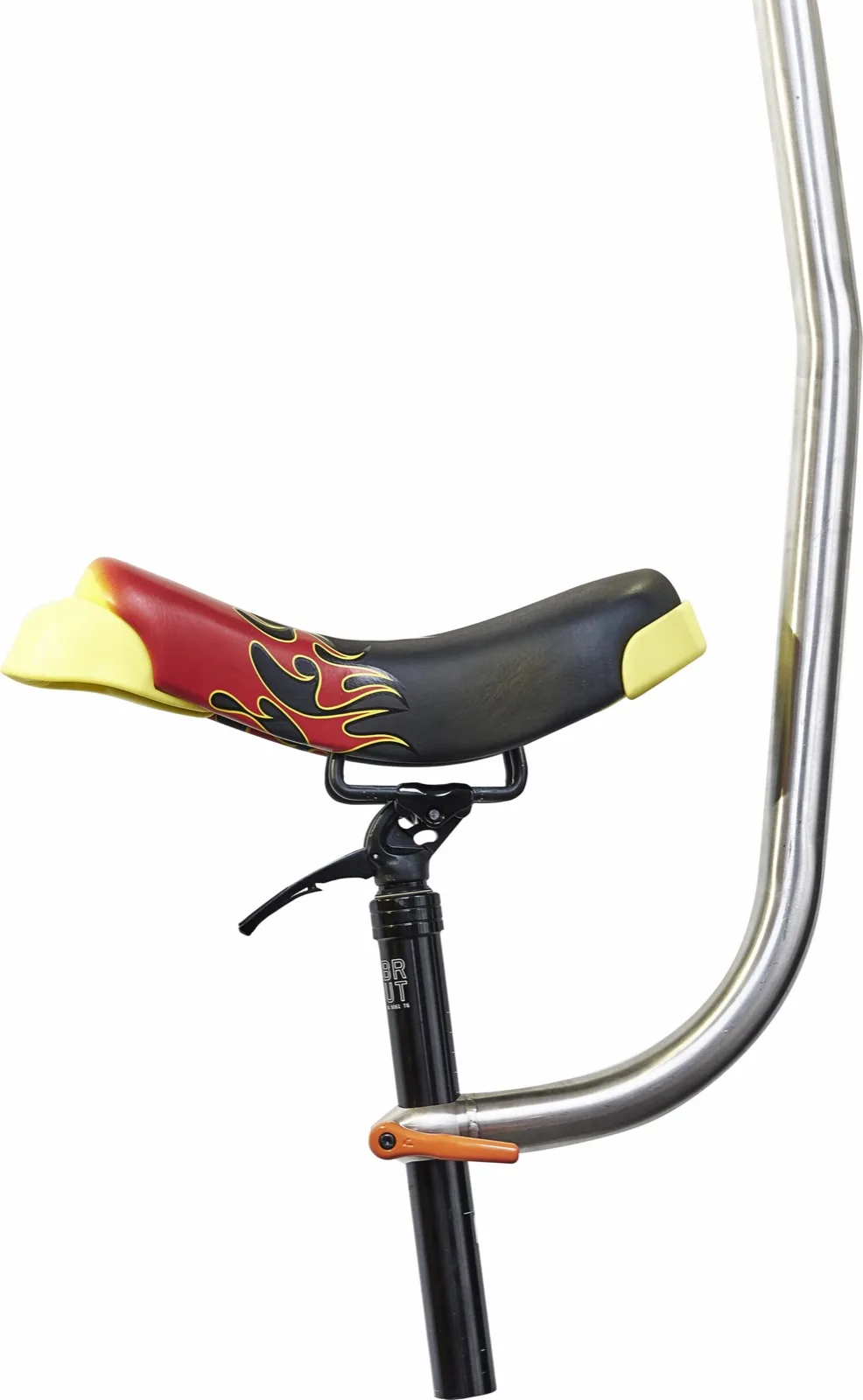
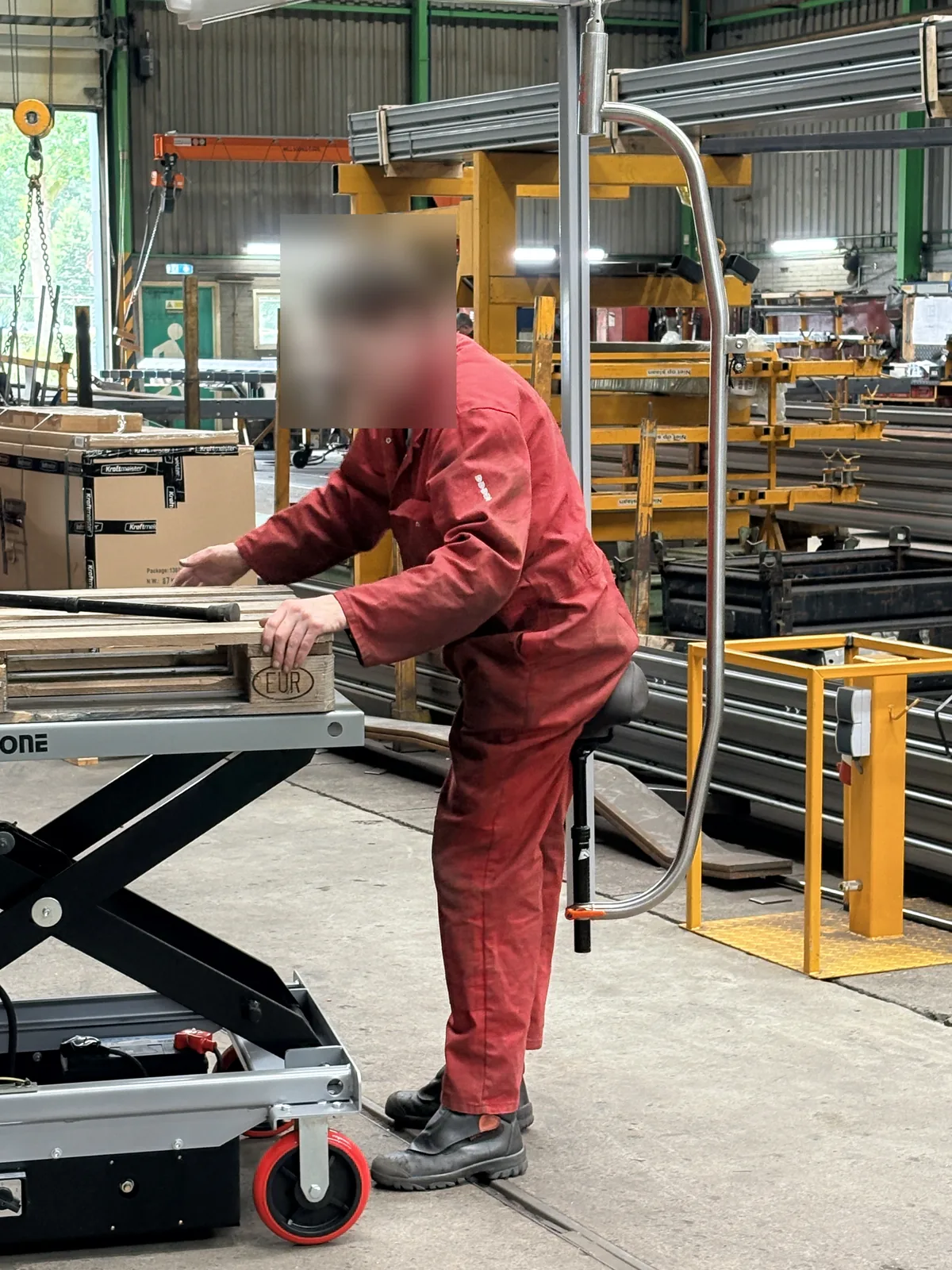
Some signals point to a post you cannot redesign, because the work simply happens standing up. There, Standing Ovation takes over part of the body weight through an overhead rail system with a mobility support: a frame with a saddle you lean on, without getting stuck in one place. That is not a solution for a complaint, but a way to lower the load before the complaint is there.
Further reading
Sources
- TNO en CBS, Nationale Enquête Arbeidsomstandigheden 2024; TNO-factsheet Fysieke arbeidsbelasting (2025)
- Arboportaal, Fysieke belasting
See how it works
About the author
Saffira Adam writes the knowledge articles for Standing Ovation. She translates research, figures and practical experience into pieces that employers, HR and occupational health professionals can act on come Monday morning.