
That prevention beats cure is something everyone believes. No organisation gets stuck on that. What they do get stuck on: where do you start, what does it cost, and when have you done enough?
This article walks through the five steps that together form the Standing Ovation prevention pyramid. For each step it sets out what it costs, what it delivers and — perhaps most importantly — where that step stops.
First: which route are you on?
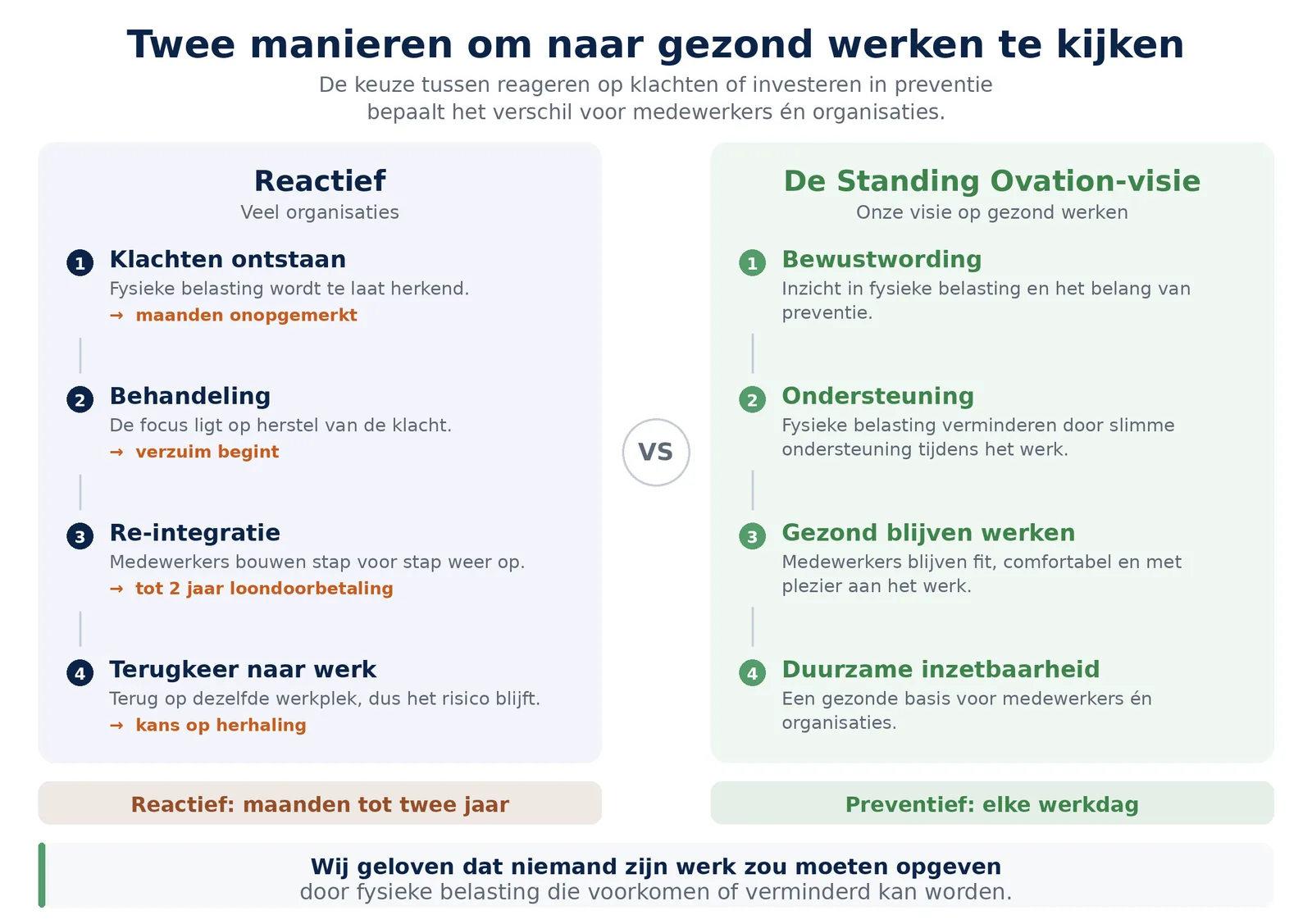
There are two ways of dealing with physical strain, and most organisations take the first without consciously choosing it. You act once there is a complaint: treatment, reintegration, return to work.
What such a diagram does not show is time. The reactive route runs on the clock of the Wet verbetering poortwachter, the Dutch act on reintegration during sickness: two years of continued wage payment, a reintegration process, an occupational physician, perhaps an occupational expert. And at the end of it someone returns to exactly the workplace that caused the complaint.
The preventive route runs on the clock of the working day. That is the real difference between those two columns.
Nor is the reactive route cheaper. Dutch employers pay some 1.5 billion euros a year in continued wage payment for absence due to musculoskeletal complaints.
The prevention pyramid, layer by layer
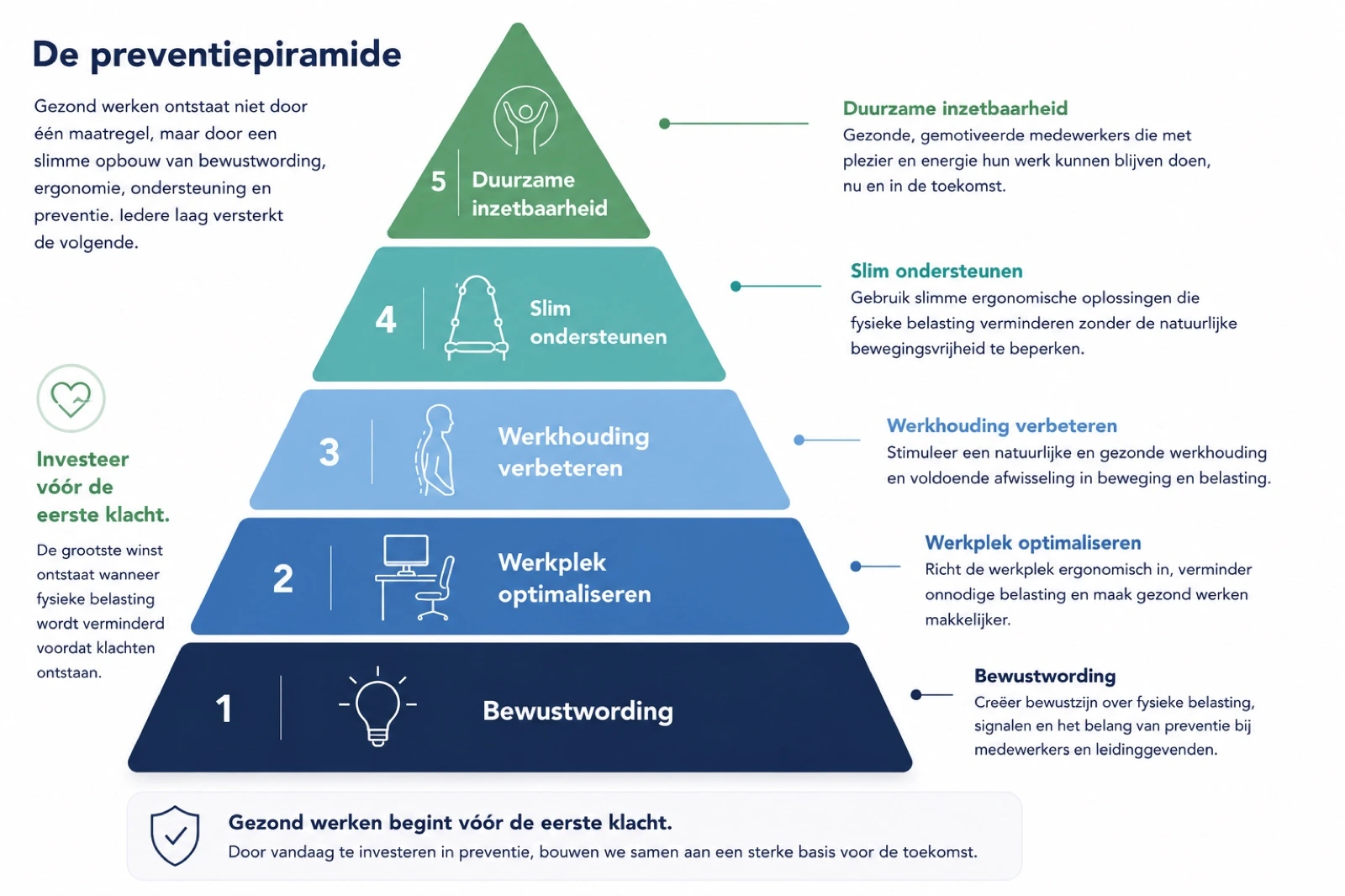
1. Awareness
What it is: making physical strain something that can be discussed, among employees and among managers.
What it costs: time, no money.
What it delivers: you hear where it sits. You probably do not know that now, because people rarely report physical strain of their own accord.
Where it stops: talking does not lower a single kilo of load. Awareness without follow-up is the fastest way to lose trust — people tell you once, and after that no longer.
2. Optimising the workplace
What it is: working height, reaching distances, material within reach, a logical layout of the process, anti-fatigue mats.
What it costs: one-off and usually modest.
What it delivers: often immediately noticeable comfort, and it is the layer with the best ratio between effort and effect.
Where it stops: a perfectly set-up workplace where you stand for eight hours is still eight hours of standing.
3. Posture and variation
What it is: rotating tasks, deliberately scheduling seated work, switching posts during the shift.
What it costs: no equipment, but room in the roster. And that is more expensive than it looks, because it requires more people to be able to work more posts.
What it delivers: the body gets moments of recovery back, exactly what static work lacks.
Where it stops: some posts cannot be rotated, because only one person can do them. That is usually also the heaviest post.
4. Smart support
What it is: physically taking over part of the load, while the person keeps moving and keeps working independently.
What it costs: a real investment, including installation in the workspace.
What it delivers: the greatest effect for work that is standing or static and that cannot be organised differently.
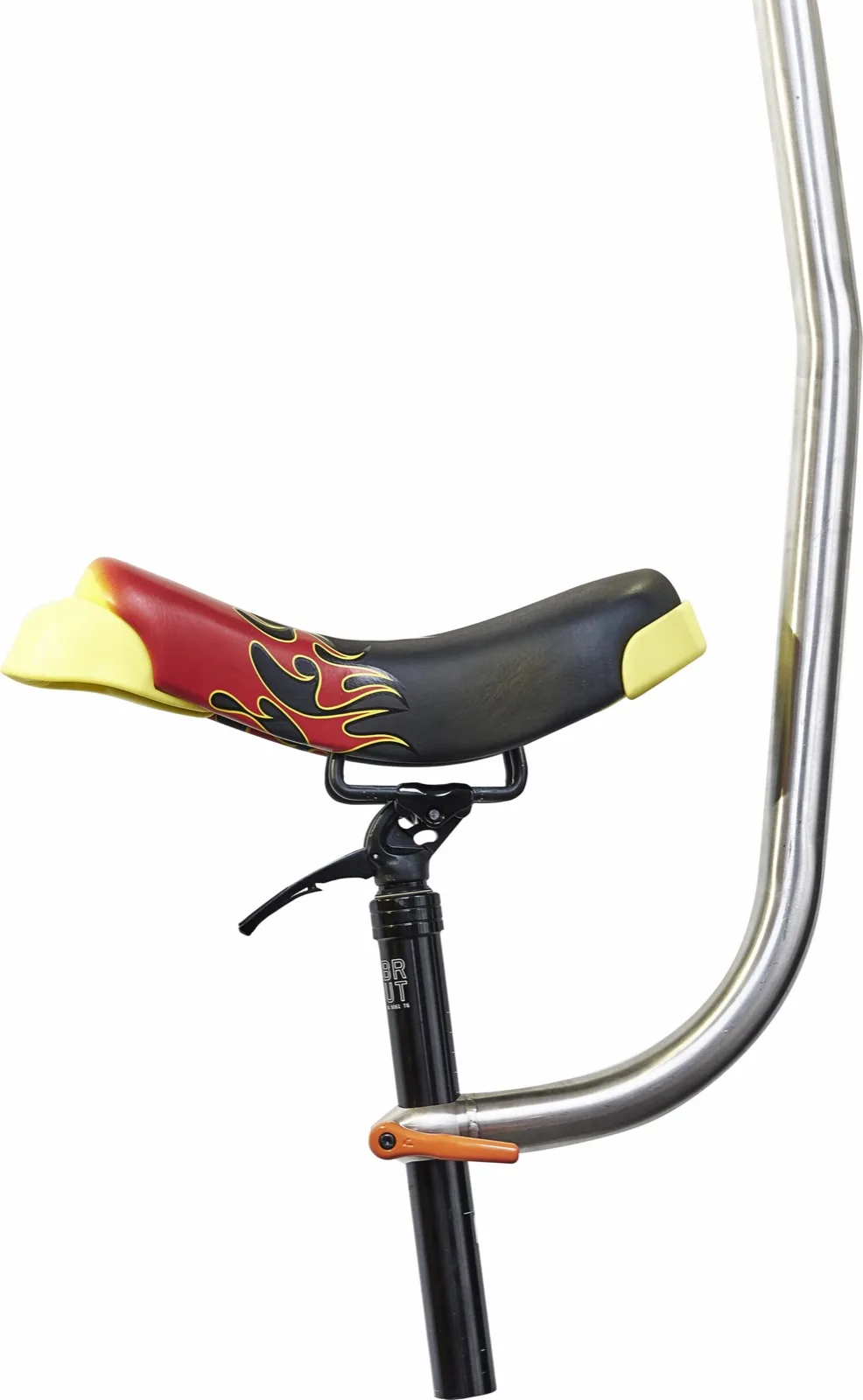
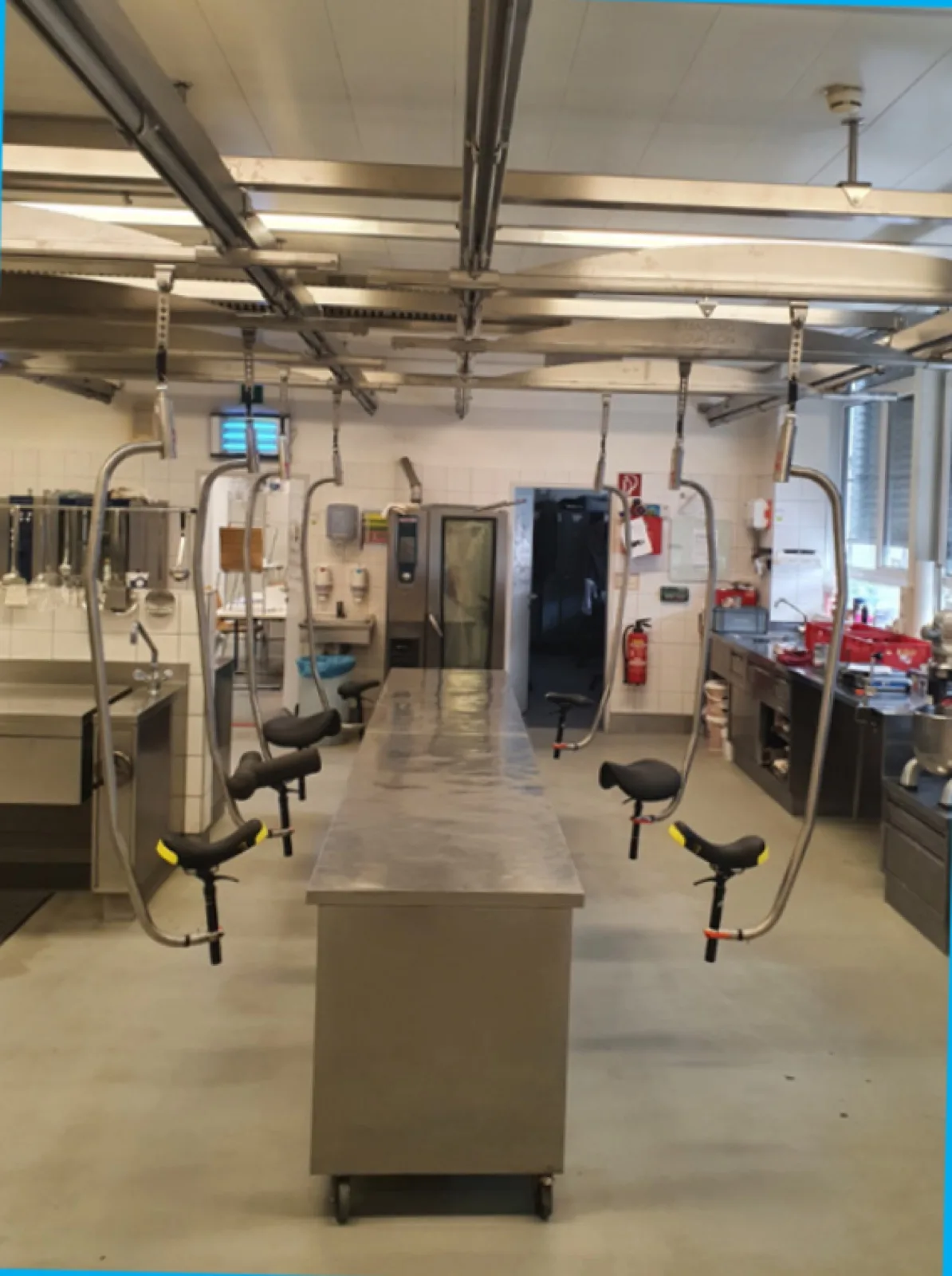
When you are here: when layers 2 and 3 have reached their limit and the work remains standing work. This is the layer Standing Ovation sits in: an overhead rail system with a mobility support — a frame with a height-adjustable saddle — that takes over part of the body weight, while the employee keeps moving freely through the room.
5. Sustainable employability
This is not a measure but the outcome of the four layers beneath it. There is nothing to do here, only something to measure: absence, turnover, and the age at which people expect to be able to keep working.
Where do you start?
At 1 and 2. They cost little, and they teach you where the problem really sits instead of where you think it sits.
But do not count on being finished there. If the work is standing work, layers 2 and 3 mostly move the load around; they do not take it away. If after a year of awareness and workplace adjustments you still hear the same complaints, you did not start wrong. You have reached the limit of layer 3.
Further reading
Sources
- TNO en CBS, Nationale Enquête Arbeidsomstandigheden 2024; TNO-factsheet Fysieke arbeidsbelasting (2025)
- Arboportaal, Fysieke belasting en statische werkhouding
- Wet verbetering poortwachter, voor de termijnen bij langdurig verzuim
About the author
Saffira Adam writes the knowledge articles for Standing Ovation. She translates research, figures and practical experience into pieces that employers, HR and occupational health professionals can act on come Monday morning.